Thursday, July 4, 2019

Let Freedom Ring! By Terri Weldon

Happy 243rd birthday to the United States of America! Needless to say, we love the 4th of July in America and we spend our day celebrating our freedom with family and friends. Some people cookout and invite the entire family over while others go to parades or parks and watch fireworks light up the nighttime sky. There are as many ways to celebrate our freedom as there are Americans.

Kind of reminds me of writing. There are as many ways to tell a story as there are authors. If I told you to write a short story that had a man, a woman, a broken down car, and a farm house I’d get a different story from each of you. Undoubtedly there would be a romance where the man’s car broke down right in front of the widow’s farmhouse and he stays on to help her out while saving money to have his car fixed. If I were writing the story the woman would be on the run from a stalker. Her car breaks down and he murders her in the farm house. A very famous duo in the speculative market wrote a great book about a house and believe me – I could have never imagined that story.

Exercise your creative freedom by telling me what story you would write. Then go out and celebrate Independence Day!


A Match Made in Sheffield
 by Terri Weldon

Natalie Benton bounced from one foster home to another until she landed on Ellie Alexander’s doorstep. Natalie’s vagabond childhood caused her to yearn for a secure life, which led to Natalie’s five-year plan: complete her law degree, marry the perfect man, become a partner at Montgomery, Haynes, and Preston, and produce one child. Getting arrested wasn’t in Natalie’s plan. Needing a public defender wasn’t in her plan. Falling for Grady Hunter, her public defender, definitely wasn’t in her plan. Can Grady convince Natalie there is more to life than her five-year plan? Is Ellie the only one who sees a future for Natalie and Grady?

Buy Link: Amazon

Terri Weldon feels blessed to be a full time writer. She enjoys traveling, gardening, reading, and shopping for shoes. One of her favorite pastimes is volunteering as the librarian at her church. It allows her to shop for books and spend someone else’s money! Plus, she has the great joy of introducing people to Christian fiction. She lives with her family in the Heartland of the United States. Terri has two adorable Westies – Crosby and Nolly Grace. Terri is a member of ACFW and RWA.

Readers can connect with Terri on her Website

Wednesday, July 3, 2019

Writers write – right? by Cindy Regnier

Well, yes, and maybe I’m going way out on the pen nub, but I’m going to say writers do something else that may be just as important as their writing. Writers encourage writers.

Writers encourage other writers, which in turn encourages those writers to encourage even more writers. Where would we be if we were in this all by ourselves? I’d venture to say not many of us would be anywhere close to where we are now. As for me, I’d rather have my writing sisters standing by ready to encourage, prod and kick me in the backside if the need arises, than to be standing all alone on top of a successful career with no one to pat my back or keep me grounded.

We all need each other. Everything is figure-out-able on this writing journey, but we can’t do it alone. Doubt kills more dreams than failure ever will, so we all need that encouragement from our friends to get us over the humps and through the valleys.

I don’t hear a lot of disagreement going on over what I’ve just said, so let’s take it a step further and look at the other side of the page. How much encouragement do you give to others? Friends, encouragement breeds encouragement in the encourager. That’s a bit of a tongue-twister, but true nevertheless. Perhaps you have been assigned a mountain to show others it can be moved. Maybe you needed a heroine so that’s what you became.

Next time you meet up with a bout of that pesky writer’s block, just look for a way to lift someone else up. You’ll find that it’s usually enough to lift yourself too. Amazing how that works. Find your tribe and love them hard. Got a critique partner? Be an encourager in the process. Tell the negative committee meeting inside your writer friend’s head to sit down and be quiet.

I don’t say this often enough, but I am so thankful to each and every person who has encouraged me along the way of my writing journey. Believe me, I know how easy it is to get discouraged, but I also know there are many standing beside me and cheering me onward. They make all the difference. A special thanks to PAWS – you know who you are. None of us would be where we are without each other.

In the words of Martin Luther King Jr, “In the end we will remember not the words of our enemies, but the silence of our friends.” Writer community, let’s drown out the silence. Share some ways others have encouraged you or you encourage others, then let’s get out there and encourage!


Writers do something else that may be just as important as their writing. Writers encourage writers. via @cindysregnier #SeriouslyWrite #amwriting #encouragement

~~~~~~


Scribbling in notebooks has been a habit of Cindy Regnier since she was old enough to hold a pencil. Born and raised in Kansas, she writes stories of historical Kansas, especially the Flint Hills area where she spent much of her childhood. Cindy is married to her husband of 36 years, has two grown sons, a son residing in heaven, a beautiful daughter-in-law, and a beautiful daughter-in-law-to-be.

A graduate of Kansas State University with a dual major in Agriculture and Business, Cindy works for her local school district as clerk of the board of education and is active in her church and community. Her experiences with the Flint Hills setting, her natural love for history, farming and animals, along with her interest in genealogical research give her the background and passion to write heart-fluttering historical romance.

Tuesday, July 2, 2019

8 Tips for Handling the Hard Critique by Emily Conrad

two people with laptops and pens


The email appears. If the subject line wasn’t enough of a giveaway, the attachment icon signals your adrenaline to pump. You hesitate to click “open” as your brain reasons through fight or flight possibilities. Finally, you opt for fight. You’re going to face this.

You sit stock still, only moving your finger to scroll and your eyes to read the critique of your manuscript.

Depending on the comments and suggestions, you might lean closer to the screen, encouraged and inspired.

Other times, tension builds in your shoulders, and a swell of anger, offense, and discouragement threatens to engulf you and every writing dream you’ve ever had.


person writing

I look for critique partner relationships marked by mutual respect and an enjoyment of each other’s manuscripts. That respect and enjoyment go a long way toward a positive critique experience, even when my critique partner suggests extensive rewrites.

Still, even a good critique partner can have a bad day. Writers, especially those who enter contests, also get feedback from people they don't know at all who might not have a compatible style. Also, as much as it pains me to type this, sometimes, the only reason a critique is hard to swallow is a writer's pride.

Whatever the reason for a negative reaction to a critique, when we're discouraged and hurting, extreme reactions beg to be put into action. Delete the whole critique! Delete the manuscript! Quit writing! Or keep writing... but never share it again! Implement every single suggestion!

I know how tempting these thoughts can be--especially that one about quitting.

So how do we distinguish the next best step through the pain? How do we get back into writing after a critique leaves us raw and ready to quit?

1. Pray. The Bible tells us to cast all our cares on God. The pain and offense that comes with hard-to-swallow critiques makes it hard for me to do this well sometimes, but as someone who writes for God’s glory, I have to trust that he hears, understands, and will help me through, even when I’m not at my best. The important thing is to keep coming to him.

2. Outlaw rash decisions. Today is not the day to quit writing or forever delete that manuscript. And though continuing education has its place, today is probably not the day to plunk down $1000 on that writing course.

3. Enlist others for perspective. Look for writers who love you and enjoy your work enough to want to see the story be the best it can be. These people can better see if the feedback has merit, but they’ll talk you through it in a way that starts to rebuild confidence and inspiration. They’ll also help you safely determine which feedback isn’t in the best interest of the story.

two laptops facing each other


4. Give grace. I’ve said things in critiques I now regret. That’s humbling, and even more so because I can’t always go back to the person later and adjust what I said. So as you seek perspective, exercise grace. Grace toward the other person by keeping their name to yourself even as you run the ideas by a select group of friends, and grace toward yourself by remembering that the feedback doesn’t define you or your writing talent. No one wants to derail another writer—and if they do want to, they don’t deserve that power.

5. Take time. Let your emotions heal and cool to more calmly discern which feedback to apply and which to let go. And as you wait, remind yourself that you do get to let go of any feedback that isn't right for the story.

6. Sift out personal opinions. Writing is a subjective business, so even when a critique partner or judge tries to be objective, opinions are going to seep in—and differ. However, if several people seem to be of the same opinion—and especially if they’re industry professionals or part of a book’s target audience—it might be time to consider if the change will improve the readers’ experience with the story. 

7. Read between the lines. Offering feedback is hard work, and sometimes, it’s so hard that a critique might identify the problem one way when really, something else is causing the issue. For example, a comment may say, “I feel removed from the action here. Can you describe more?” Flabbergasted, you reread the paragraph of description and wonder what else you could add. After some reflection, however, you might realize readers feel removed from the action because you need to change the point of view character for the scene to one who's more immediately involved. This is tricky, because the critique might not say why the person is asking for change. They may simply say, "Can you add description?" This is when having other opinions can help. If several people are asking for changes to a scene, it's a signal that something is off. It's up to the writer to sleuth out what that something is.

8. Retain ownership. The story is still yours. If it’s published someday, your name will be on the cover. Seriously consider feedback, but don’t implement changes that don’t resonate with you and the story you’ve been called to write.


_____________

8 Tips for Handling the Hard Critique by @emilyrconrad on #seriouslywrite #amwriting #writetip

How do we get back into #writing after a #critique leaves us raw and ready to quit? Some ideas from @emilyrconrad on #seriouslywrite

Respect and enjoyment goes a long way toward a positive critique experience, even when a critique partner suggests extensive rewrites. But what do we do when the experience isn't so positive? @emilyrconrad on #seriouslywrite #amediting


Photo credits
Person writing and two people with laptops and pencils photos by Helloquence on Unsplash
Two laptops facing each other photo by Marten Bjork on Unsplash
Graphics created on Canva.com


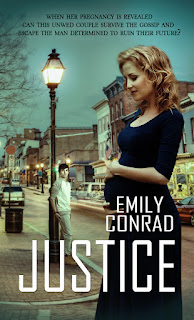
Emily Conrad headshotEmily Conrad writes Christian romance and a blog to encourage women of faith. Her debut novel, Justice, released from Pelican Book Group in 2018. She lives in Wisconsin with her husband and two rescue dogs. She loves Jesus and enjoys road trips to the mountains, crafting stories, and drinking coffee. (It’s no coincidence Justice is set mostly in a coffee shop!) She offers free short stories on her website and loves to connect with readers on social media.

www.emilyconradauthor.com
Facebook.com/emilyconradauthor
Instagram.com/emilyrconrad
Twitter.com/emilyrconrad
https://www.amazon.com/Justice-Emily-Conrad-ebook/dp/B0792HGXQN/JUSTICE

Jake thought he was meant to marry Brooklyn, but now she's pregnant, and he had nothing to do with it. Brooklyn can’t bring herself to name the father as she wrestles with questions about what her pregnancy means and how it will affect her relationship with Jake. If Harold Keen, the man who owns the bookstore across from Jake's coffee shop, has anything to do with it, the baby will ruin them both. Can Jake and Brooklyn overcome the obstacles thrown in their path, and finally find the truth in God's love and in each other?


Amazon
Barnes and Noble


Monday, July 1, 2019

The Closing of the Circle by Sara Davison

Sara Davison

How do we know when our writing has gone full circle? My guest today, fellow Mountain Brook Ink author Sara Davison, is here to share her wisdom and an aha moment that resonated with me. Enjoy! ~ Annette

 ~~


As I have always been deeply uninterested in being in the spotlight, I have often wondered why I have such a deep, driving need for the words I’ve written to actually be read by someone. At least, I have wondered about this driving need until recently, when I came across a quote in a book. The words hit me so profoundly that I literally had to set the book down and contemplate them for several minutes, letting the truth of them sink in.

The quote was by Max McLean, founder of the Fellowship for the Performing Arts, who said, “…I am amazed at the communicators who have never quite understood that a story is not a story until it has been received.”

Wham! The revelation struck me like an apple falling from a tree and bouncing off my head:

The stories I write are incomplete until someone reads them. It is in the reading that the connection is made, the process is completed, the circle is closed.

It’s the whole tree falling in the forest thing: If a writer pens a story and no one is around to hear (or read) it, does it make an impact? Of course not. And making an impact, connecting with a reader on some level, “stirring the blood” as McLean describes it, is the entire point of the story-telling process.

Which is why I long to have my words read: to establish that connection with another human being, to in some way touch them with the truth of God’s goodness, faithfulness, and love.

Whether the feedback is positive (which I love and appreciate), or negative (which I see the value of, especially if it is kindly done or at least kindly meant), receiving it affirms that my words have been read, the blood has (hopefully) been stirred, even if just a little, and an impact, however tiny, has been made.

The story has just become a story.

When does a story become a story? @SaraJDavison

The Closing of the Circle by @SaraJDavison


~~~~~

Vigilant by Sara Davison

Vigilant
She must choose between the man who represents the law and the one who may have taken it into his own hands.


Neglected by her parents for most of her life, Nicole Hunter keeps everyone, especially men, at arms’ length. So when Attorney Gage Kelly walks into the diner where she is waiting tables one evening, she fights her attraction to him with everything she has.

Gage and his brother Holden grew up in an abusive home, and Gage has baggage of his own. But the connection between him and Nicole is too strong to ignore, and Gage manages to convince them both that their relationship is worth the risk.

Then children begin disappearing in the night.

When Detective Daniel Grey starts to close in on the child snatcher, and enlists Nicole’s help, she faces her deepest fear. Everything and everyone she has clung to so tightly could be ripped from her, leaving her completely alone.

Except for one.


~~~~~


Sara Davison is the author of the romantic suspense novel, The Watcher, and the romantic suspense series, The Seven Trilogy. She has been a finalist for eight national writing awards, including Best New Canadian Christian author, a Carol Award, and two Daphne du Maurier Awards for Excellence in Mystery/Suspense. She is a Word and Cascade Award winner. She currently resides in Ontario, Canada with her husband Michael and their three children, all of whom she (literally) looks up to. Get to know Sara better through her blog: www.saradavison.org; on Twitter: @sarajdavison; or on Facebook: @authorsaradavison.