Showing posts with label handling criticism. Show all posts

Tuesday, April 7, 2020

Going Beyond Pet Peeves to Serve Readers by Emily Conrad

Woman looking over top of open book
 
Writers are encouraged to be an active part of the reading community, and sometimes, we find encouragement there. Other times, discussions we witness online sap our will to write. A "pet peeve" thread in an online reader group can be especially disheartening.

If you're new to the kind of post I'm talking about, this is what happens: 

Someone in an online reader group will pose the question, “What are your pet peeves in fiction?”

Dozens of readers reply.

How could you ignore such valuable advice? This is a glimpse into readers’ minds!

Unfortunately, determining which comments are helpful advice and which are simply one reader's personal preference is difficult. And to study a list that focuses on the negetive can undermine a writer's confidence.

So, if you've read one of these threads and become discouraged, you're in good company. I've been there, too. But a month or two ago, I had an experience that, for once, stopped that downward spiral of thoughts before it could even start.

It Takes All Types


It started with a stop at my accountant's office. (Yes, before COVID-19 was the concern it is now.)

I hate doing my taxes, so I happily left my paperwork in her care.

As I got into my car, I thought, It takes all types. Everybody is different, and look how well we balance each other out!

This was still fresh on my mind when I came across a pet peeve post later that day.

In the thread, I found a comment in the thread that named the three oddly-specific pet peeves. Combined, that list sums up one of my short stories… right down to one of the main character’s names.

I might have gotten defensive, frustrated, or discouraged under other circumstances.

This time, I laughed.

It takes all types!

That commenter would not like my story, but it's been available free on my website for a couple of years now, and I’ve heard from others who have loved it.

The same variety that makes the larger world work results in a variety of tastes when it comes to readers.

And that's good because writers vary greatly in what we like to write, too.

Because of our variety, we meet each other's needs--even if no single readers enjoys every story and no single story finds universal praise.

woman browsing bookshelves

Narrowing the Focus


So, do reader opinions matter?

Of course! We each have a target audience to serve. Our job as writers isn't to create universally-pleasing content, but to serve our niche of readers as well as we can.

We won't do this if we take our cues from a generic pet peeve post because the readers who reply may or may not be part of our target audience. Even if they are, an element they dislike may be so minor that they'll read past it for a good story. Or, a larger element that might frustrate a particular reader in general may work in one specific story.

Instead, study books your target audience loves.
Once you've gained a basic understanding of what works and doesn't in your genre, reader groups become important again.

Pay attention to what readers say when they post about specific books. What elements do they praise? What are they less enthusiastic about? Why?

Notice your target audience's enthusiasm for their favorite novels, and let that inspire you to offer them something you know they'll love.

Applying What You've Learned to Your Story


Once you have a general understanding of what works and doesn't--and why--seek specific feedback from trusted sources on our own manuscripts.

Keep an open mind to suggestions. Balance them against what you know of your readers' tastes, and be extra mindful when more than one of your critique partners says something isn't working in your story.

woman reading in library


We write for readers. Their opinions are important, and only in serving them well will we build an audience.

But we also have to protect our hearts and our stories.

A list of pet peeves isn't a solid anchor for a story. The comments often conflict with each other, and don't necessarily speak to what's most important in a genre.

By mindfully studying our genre and our target audiences, we anchor our manuscripts in tried and true methods of engaging readers, making our stories that much more likely to bring positive reader reactions.


If you've ever been derailed by an online post where readers list their pet peeves, may this post encourage your writer heart. via @emilyrconrad #amwriting #amediting #seriouslywrite @MaryAFelkins

A list of pet peeves isn't a solid anchor for a story. The comments often conflict with each other and don't necessarily speak to what's most important. So how do we serve readers? @emilyrconrad #writing #seriouslywrite @MaryAFelkins

By mindfully studying our genre and our target audiences, we anchor our manuscripts in tried and true methods of engaging readers @emilyrconrad #seriouslywrite #writetip #writing @MaryAFelkins


PS - If you're in the mood for a somewhat sappy romantic short story, the one I referenced in this post is "Thirty-One and Falling," which is available for free here.

Photo credits
Woman looking over top of opened book photo by Kevin Lehtla on Unsplash
Woman reading in library photo by Eliott Reyna on Unsplash
Woman browsing bookshelves photo by Clay Banks on Unsplash


_______________________

Emily Conrad headshotEmily Conrad writes Christian romance and a blog to encourage women of faith. She lives in Wisconsin with her husband and two rescue dogs. She loves Jesus and enjoys road trips to the mountains, crafting stories, and drinking coffee. (It’s no coincidence her novel Justice is set mostly in a coffee shop!) She offers free short stories on her website and loves to connect with readers on social media.

www.emilyconradauthor.com
Facebook.com/emilyconradauthor
Instagram.com/emilyrconrad
Twitter.com/emilyrconrad
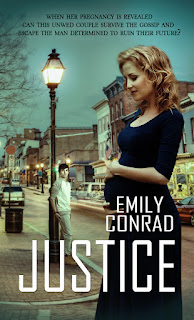
https://www.amazon.com/Justice-Emily-Conrad-ebook/dp/B0792HGXQN/JUSTICE

The love of a lifetime, a quest for justice, and redemption that can only be found by faith.

Jake thought he was meant to marry Brooklyn, but now she's pregnant, and he had nothing to do with it.

Brooklyn can’t bring herself to name the father as she wrestles with questions about what her pregnancy means and how it will affect her relationship with Jake.

If Harold Keen, the man who owns the bookstore across from Jake's coffee shop, has anything to do with it, the baby will ruin them both.

Can Jake and Brooklyn overcome the obstacles thrown in their path, and finally find the truth in God's love and in each other?

Amazon
Barnes and Noble

Tuesday, July 2, 2019

8 Tips for Handling the Hard Critique by Emily Conrad

two people with laptops and pens


The email appears. If the subject line wasn’t enough of a giveaway, the attachment icon signals your adrenaline to pump. You hesitate to click “open” as your brain reasons through fight or flight possibilities. Finally, you opt for fight. You’re going to face this.

You sit stock still, only moving your finger to scroll and your eyes to read the critique of your manuscript.

Depending on the comments and suggestions, you might lean closer to the screen, encouraged and inspired.

Other times, tension builds in your shoulders, and a swell of anger, offense, and discouragement threatens to engulf you and every writing dream you’ve ever had.


person writing

I look for critique partner relationships marked by mutual respect and an enjoyment of each other’s manuscripts. That respect and enjoyment go a long way toward a positive critique experience, even when my critique partner suggests extensive rewrites.

Still, even a good critique partner can have a bad day. Writers, especially those who enter contests, also get feedback from people they don't know at all who might not have a compatible style. Also, as much as it pains me to type this, sometimes, the only reason a critique is hard to swallow is a writer's pride.

Whatever the reason for a negative reaction to a critique, when we're discouraged and hurting, extreme reactions beg to be put into action. Delete the whole critique! Delete the manuscript! Quit writing! Or keep writing... but never share it again! Implement every single suggestion!

I know how tempting these thoughts can be--especially that one about quitting.

So how do we distinguish the next best step through the pain? How do we get back into writing after a critique leaves us raw and ready to quit?

1. Pray. The Bible tells us to cast all our cares on God. The pain and offense that comes with hard-to-swallow critiques makes it hard for me to do this well sometimes, but as someone who writes for God’s glory, I have to trust that he hears, understands, and will help me through, even when I’m not at my best. The important thing is to keep coming to him.

2. Outlaw rash decisions. Today is not the day to quit writing or forever delete that manuscript. And though continuing education has its place, today is probably not the day to plunk down $1000 on that writing course.

3. Enlist others for perspective. Look for writers who love you and enjoy your work enough to want to see the story be the best it can be. These people can better see if the feedback has merit, but they’ll talk you through it in a way that starts to rebuild confidence and inspiration. They’ll also help you safely determine which feedback isn’t in the best interest of the story.

two laptops facing each other


4. Give grace. I’ve said things in critiques I now regret. That’s humbling, and even more so because I can’t always go back to the person later and adjust what I said. So as you seek perspective, exercise grace. Grace toward the other person by keeping their name to yourself even as you run the ideas by a select group of friends, and grace toward yourself by remembering that the feedback doesn’t define you or your writing talent. No one wants to derail another writer—and if they do want to, they don’t deserve that power.

5. Take time. Let your emotions heal and cool to more calmly discern which feedback to apply and which to let go. And as you wait, remind yourself that you do get to let go of any feedback that isn't right for the story.

6. Sift out personal opinions. Writing is a subjective business, so even when a critique partner or judge tries to be objective, opinions are going to seep in—and differ. However, if several people seem to be of the same opinion—and especially if they’re industry professionals or part of a book’s target audience—it might be time to consider if the change will improve the readers’ experience with the story. 

7. Read between the lines. Offering feedback is hard work, and sometimes, it’s so hard that a critique might identify the problem one way when really, something else is causing the issue. For example, a comment may say, “I feel removed from the action here. Can you describe more?” Flabbergasted, you reread the paragraph of description and wonder what else you could add. After some reflection, however, you might realize readers feel removed from the action because you need to change the point of view character for the scene to one who's more immediately involved. This is tricky, because the critique might not say why the person is asking for change. They may simply say, "Can you add description?" This is when having other opinions can help. If several people are asking for changes to a scene, it's a signal that something is off. It's up to the writer to sleuth out what that something is.

8. Retain ownership. The story is still yours. If it’s published someday, your name will be on the cover. Seriously consider feedback, but don’t implement changes that don’t resonate with you and the story you’ve been called to write.


_____________

8 Tips for Handling the Hard Critique by @emilyrconrad on #seriouslywrite #amwriting #writetip

How do we get back into #writing after a #critique leaves us raw and ready to quit? Some ideas from @emilyrconrad on #seriouslywrite

Respect and enjoyment goes a long way toward a positive critique experience, even when a critique partner suggests extensive rewrites. But what do we do when the experience isn't so positive? @emilyrconrad on #seriouslywrite #amediting


Photo credits
Person writing and two people with laptops and pencils photos by Helloquence on Unsplash
Two laptops facing each other photo by Marten Bjork on Unsplash
Graphics created on Canva.com


Emily Conrad headshotEmily Conrad writes Christian romance and a blog to encourage women of faith. Her debut novel, Justice, released from Pelican Book Group in 2018. She lives in Wisconsin with her husband and two rescue dogs. She loves Jesus and enjoys road trips to the mountains, crafting stories, and drinking coffee. (It’s no coincidence Justice is set mostly in a coffee shop!) She offers free short stories on her website and loves to connect with readers on social media.

www.emilyconradauthor.com
Facebook.com/emilyconradauthor
Instagram.com/emilyrconrad
Twitter.com/emilyrconrad

https://www.amazon.com/Justice-Emily-Conrad-ebook/dp/B0792HGXQN/JUSTICE

Jake thought he was meant to marry Brooklyn, but now she's pregnant, and he had nothing to do with it. Brooklyn can’t bring herself to name the father as she wrestles with questions about what her pregnancy means and how it will affect her relationship with Jake. If Harold Keen, the man who owns the bookstore across from Jake's coffee shop, has anything to do with it, the baby will ruin them both. Can Jake and Brooklyn overcome the obstacles thrown in their path, and finally find the truth in God's love and in each other?


Amazon
Barnes and Noble


Friday, August 8, 2014

Why I Don’t Read My Reviews by Carre Armstrong Gardner


Carre Armstrong Gardner

One of the scary things about putting your writing out there for the world to see is that it’s out there for the world to see … and judge. It can be difficult and sometimes hurtful to open ourselves up for criticism. How do we handle it? Carre Armstrong Gardner shares advice and encouragement on this topic. Enjoy! ~ Dawn


Why I Don’t Read My Reviews
by Carre Armstrong Gardner
  
Ernest Hemingway famously said, "There is nothing to writing. All you do is sit down at a typewriter and bleed."  Surely Hemingway was talking only about the daily, private act of writing. The bigger act of having published a book that loved ones and strangers are actually holding in their hands isn’t so much like sitting at a typewriter and bleeding. It’s more like laying yourself across a butcher block, plunging a knife into your guts, and inviting everyone to come and have an opinion about your blood.  

My first novel had been released about 2 weeks when I realized it wasn’t a good idea for me to read the reviews it was getting. In one morning, I might read 5 great reviews and a single cutting one, but guess which one stayed with me all day? Which hung around at my heels, tugging insistently at my shirttail like some morose, runny-nosed kid, until I was driven, sniveling, into the pantry, where I crouched in a corner and ate spoonfuls of Nutella straight from the jar?

For most of us criticism has a way of ringing truer than praise. I think this is an unfortunate outcome of having been taught that polite people don’t toot their own horns. Which of us doesn’t secretly dislike a braggart? Somehow, it seems okay to think meanly of ourselves, but it’s a bit over-the-top to think we’re really great at something.Yet isn’t the habit of self-deprecation kind of like saying that you’re one of God’s “factory seconds?” That the gifts He’s given you are only second-rate ones? I mean…is it even possible for God to turn out “factory seconds?”Still, most of us (myself included) are not very accomplished at embracing, with confidence, our God-given awesomeness.

Meanwhile, it turns out the praise and the criticism I’m getting for my book amount to exactly the same thing: that All Right Here is not what readers expect in a “Christian” novel. Whether or not that’s a good thing depends on who’s reading it. In writing as in anything, trying to please everyone is the surest route to pleasing no one at all.

What I’m learning through my agony on the butcher block is this:  if you’re going to survive to write another day, you have to learn the art of bleeding without thought for the onlookers. This is not just good advice for writing. It’s good advice for life. Bleed freely and merrily and warmly, and with everything you have. One thing nobody can argue with is your authentic story: tell it. It is your blood: bleed it. In the end, that’s all you can do.


Tweetables:


Writing is like laying yourself across a butcher block, plunging a knife into your guts, and inviting everyone to come and have an opinion about your blood. Click to tweet.

Isn’t the habit of self-deprecation kind of like saying that you’re one of God’s “factory seconds?” Click to tweet.

Most of us are not very accomplished at embracing, with confidence, our God-given awesomeness. Click to tweet.

In writing as in anything, trying to please everyone is the surest route to pleasing no one at all. Click to tweet.


Ivy Darling can’t have children of her own, and her husband Nick’s resentment is forcing them apart. And while Ivy has the support and love of her large, close-knit family, Nick’s family has never welcomed her into theirs. When the three children next door are abandoned by their mother, Ivy and Nick take them in for the night. One night becomes several, and suddenly Ivy and Nick find themselves foster parents to the only African-American kids in the town of Copper Cove, Maine. As Ivy grows more attached to the children, Nick refuses to accept their eclectic household as a permanent family. Just as Ivy begins to question whether or not she wants to save her emotionally barren marriage, Nick begins to discover how much Ivy and the children mean to him. But is his change of heart too little, too late?


Carre Armstrong Gardner writes from the big small town of Portland, ME, where she's the mom of 3 teenagers and 2 rescue dogs she wishes she didn't own. (Only the dogs, not the teenagers.) When she's not writing, she works as a Registered Nurse at a local hospital.

To learn more and connect with Carre visit:


Thursday, January 7, 2010

Hurtful Criticism

Thursdays - Devotions for Writers

"Am I now trying to win the approval of men, or of God?
Or am I trying to please men? If I were still trying to please men,
I would not be a servant of Christ."
(Gal 1:10 NIV)

How do you handle criticism pertaining to your work?

I’m used to receiving constructive feedback from my critique group. I ask for it and I trust them to be honest. I also trust them to not be hurtful. My work has never been trashed by readers, but this past week I experienced criticism that was not only painful, it didn’t feel fair.

I work for a national telecommunications company in a departments that deals with customer accounts. I look at payments, numbers, and uninteresting stuff (to a creative person) all day. But when it became known that I write, I was asked to create a quarterly newsletter for the department of 90 people. This is an ongoing, out-of-the box kind of project. Four people stepped up to help me, offering their time and wonderful gifts.

The first issue recently came out and received rave reviews from managers, supervisors, and even a top executive. They loved the variety of business, fun, and personal topics. We were flying high.

Then we sent out a survey – to be answered anonymously by the department. Most comments were very positive, but constructive feedback was also given.

However, comments left by one person cut. They weren’t constructive, but felt mean and spiteful. A personal attack. “Poor editing.” The comment was left without explanation, as well as additional words slamming every aspect of the publication.

My assistant editor and I wracked our brains throughout the day wondering if we had an enemy in the department who wanted to make sure our egos were kept in check. Someone who was envious of the project? A coworker who was having a bad day and just needed to take it out on someone?

Or did this individual’s comments have merit?

I pulled myself back, remembering several multi-published and award-winning authors who had received scathing letters from readers who didn’t like their books.

Hmmmmmm . . . I guess I’m in good company.

And criticism is a part of the publishing business. I better get used to it.

But more than that . . . I need to remember that my job is to please God, not man.

I encourage you to keep that knowledge tucked away in you heart. Because if it hasn’t happened yet, it will. You’ll read hurtful comments that will make you question your ability to write anything. Even your grocery list.

God’s approval or man’s?

We all make that decision.

Dawn