Thursday, June 6, 2019

God’s Family: A Forever Place to Belong A devotional by Alexis A. Goring

We all want to belong.

Sororities and fraternities are a big deal for college students in the United States of America. There’s a whole grueling, sometimes embarrassing process that young men and women go through just to belong to one.

People go to great lengths and do all sorts of things (good and bad) just to get in because they want to belong to a support system that’s like family consisting of their peers.

But what they fail to realize is that they are already invited to be part of God’s Family where they truly belong and are loved unconditionally.

Best of all, God’s Family is for life not only on this Earth but forever.

Beth Moore, a famous Bible teacher and writer, said something in her book Breaking Free that resonates with me. She wrote, “God is not only the answer to a thousand needs, He is the answer to a thousand wants. He is the fulfillment of our chief desire in all of life. For whether or not we’ve ever recognized it, what we desire is unfailing love.”

Unfailing love can only come from the heart of God. Not sororities. Not fraternities. Not gangs. Not high school cliques. Not memberships to prestigious organizations. Only God.

I love the song “Your Love Never Fails” by Jesus Culture. It’s about how God’s love never fails or gives up on us. He is our Creator, Lord, Savior, Redeemer and truest Best Friend. He loves us with all of His divine heart and He wants us to love Him too. But He will never make us love Him because He wants us to love Him out of the free will that He gave us, not because we’re scared of going to hell or have ulterior motives about making it into Heaven.

God is love. He embodies the word and His love for His creation is present in nature all around this world! He is our Heavenly Father and when we accept His Son Jesus Christ into our lives, we become a permanent part of His forever family!

The best part is that we don’t have to do anything drastic to belong to God’s Family. We just have to trust Him, believe in Him and accept the free gift of salvation that He offers humankind through His Son Jesus Christ. According to John 1:12 (ESV), this is how we become part of God’s family after we accept Jesus Christ into our hearts: “But to all who did receive him, who believed in his name, he gave the right to become children of God.”

It’s simple. No strings attached. Only hope eternal knowing that when our life here on Earth ends that we have the promise of spending eternity with Him when Jesus Christ returns to Earth again to take His faithful followers to Heaven.

God’s Family is global. When you join His forever family, you gain brothers and sisters in Christ from around the world. Just think how grand our big, diverse family reunion with our brothers and sisters in Christ will be when we make it to Heaven!

Belonging to God’s Family is something we should all seek before seeking acceptance from any social or prestigious organization here on Earth. Remember, your worth does not come from what your fellow man thinks of you. Your worth comes from God! Focus on what He says about you. Believe what He knows is true about you. Let Him be your mirror. Listen to His Truth. Don’t allow what mankind says to define you, good or bad. Let your sense of self – your core identity – come from God! He thinks you’re amazing because He made you. As one of His children, you are loved!

Yes, I know that as mortals, even when we have the Creator of the Universe lavishing His divine love upon us, we still may want to seek acceptance from sororities, fraternities or other prestigious organizations that are safe (gangs and cliques are NOT safe). I’m not saying to not seek after those things. I’m just saying to keep God as your primary focus and seek Him first. Find out what He wants you to do and ask Him for wisdom to make good decisions that will help you, not hurt you. Also, as you journey through life, remember who you are (your identity as a follower of Jesus Christ) and whose you are (you belong to God) and refuse to let the opinions of people deter you from remaining a part of God’s Family.

In closing, I’d like to share a prayer from Beth Moore about unfailing love that is from her book, Breaking Free. She wrote, “Oh, God, awake our souls to see—You are what we want, not just what we need. Yes, our life’s protection, but also our heart’s affection. Yes, our soul’s salvation, but also our heart’s exhilaration. Unfailing love. A love that will not let me go!”

God’s Love for you will never let you go. Stay close to Him and allow Him to direct your destiny. Remember, you are loved and part of His family!

Alexis A. Goring is a college graduate with a degree in print journalism from Washington Adventist University in Takoma Park, Maryland. Writing is her passion. She hopes that her stories will touch hearts, bring smiles to faces, and inspire minds to seek God whose love for humanity is unfailing.

Readers can connect with Alexis at Facebook or at her Website

Wednesday, June 5, 2019

Writer Burnout by Elaine Marie Cooper

I used to think that healthcare workers and first responders were the main victims of burnout. Too many work hours, too little sleep, often eating poorly—that, along with the stress of dealing with people’s lives. It never occurred to me that becoming a writer could lead a person to similar stressors that can result in both physical and emotional symptoms. It could even prompt a word crafter to throw in the towel and say, “Enough! I’m finished writing.”

If you think about the writing life, it sounds so peaceful. Sipping on tea at your desk with a forest view out your window, the words of inspiration flowing through your fingers. Endless calm and creativity, while royalty checks arrive in the mail daily.

If you’ve been a writer for any length of time, you are rolling your eyes at this description. We all know the writing life is far from this.

The reality is, it’s hard work. Anyone who is serious about writing, whether books, magazines, newspapers, or any other outlet for communication, knows that a writer has more than a few struggles to overcome.

Demanding work hours
Many writers do not make a living from their projects and work a “day job.” This means you might be squeezing in those creative moments in the evening or on the weekends. This can lead to nonstop work.

Not enough sleep
If you are essentially working two jobs, you are likely somewhat sleep deprived. The effects of sleep deprivation include weakening your immune system, exhausting your eye muscles, and impacting your mood and emotions.

Eating poorly
Let’s face it, long hours at a keyboard is hardly conducive to inciting enthusiasm for cooking. You just want to eat and you need it quickly so you can get back to work. Fast food will do. But several nights a week?

It impacts family
It’s hard to reason with a two-year-old who wants to play with mommy but she can’t because she has a deadline. Or with a teenager who needs dad to have the sex talk with him tonight but dad’s going to a writer’s conference and needs to create a book proposal.  Or a spouse who really wants to be with you tonight instead of going to bed alone.

Deadlines, writer’s conferences, and book proposals are the stuff of reality for those called to write. But if these demands begin to take over our very lives and relationships, perhaps we need to re-evaluate our schedules. Perhaps we need to pace our lives a bit and prioritize time off with the people who love us. Perhaps we need to pick and choose our obligations, before they overtake our lives.

Sometimes we need to say “no” to a writing project, and say “yes” to healthier living. 


"...if these demands begin to take over our very lives and relationships, perhaps we need to re-evaluate our schedules." via @elainemcooper #SeriouslyWrite

~~~~~~~


Elaine Marie Cooper has two historical fiction books that recently released: War’s Respite (Prequel novella) and Love’s Kindling.Love’s Kindling is available in both e-book and paperback. They are the first two books in the Dawn of America Series set in Revolutionary War Connecticut. Cooper is the award-winning author of Fields of the Fatherless and Bethany’s Calendar. Her 2016 release (Saratoga Letters) was finalist in Historical Romance in both the Selah Awards and Next Generation Indie Book Awards. She penned the three-book Deer Run Saga and has been published in numerous magazines and anthologies. You can visit her website/ blog at www.elainemariecooper.com


Tuesday, June 4, 2019

Whataboutism: What it is and how to beat it, by Emily Conrad

The Dictionary.com word of the day on May 16th was, “whataboutism.” The definition wasn’t quite what I expected. I’ll share that with you, and then I’d like to suggest a couple of alternate definitions, if I may.

Dictionary and plant


whataboutism
noun
  1. The official definition is available here. Basically, it’s a tactic to excuse one’s own faults by pointing out others’ faults, as in, “What about all the typos in published books? The two in my query letter shouldn’t have been a big deal. We’re all human.”
  2. A tactic to claim a right to the blessing someone else was given, as in, “What about her publishing contract, God? Don’t I deserve one, too?”
  3. A tactic to pull another person else down with us, as in, “What about him? Shouldn't his work have been rejected for too much telling, too?”
  4. A phrase used to check on the welfare or to advocate for another person, as in, “What about Jane? Do you have a minute to listen to her pitch, too?”
(Side note: The word was first used long after the publication of the dictionary I photographed for this post, so though it made for nice pictures, it doesn't have an entry to match the post.)

Whataboutism may sound kind of playful and funny at the outset, but the examples of it at work aren’t so funny anymore. Whether the official definition or one of my made-up ones, whataboutism is all about comparison and entitlement.

This is an incredibly easy trap to fall into as a writer.

Whether the official definition or one of my made-up ones, whataboutism is all about #comparison and entitlement. This is an incredibly easy trap to fall into as a #writer. #butJesus via @emilyrconrad on #seriouslywrite
A close up of an old Webster's Dictionary entry for the word what

Whataboutism can disguise itself by dropping the phrase it’s known for while keeping the comparison and entitlement. Instead of “What about the agent that asked to see her full manuscript? Why didn’t that agent request mine?” we may ask, “She got a request. Why didn’t I?”

And if we’re really going to get honest here, we’re probably mentally cataloguing what we feel are the faults in that other writer’s manuscript. Our focus is on ourselves, and though we’re not resorting to the childish phrase “What about…?”, we are insulting another writer, her work, and the journey it’s taken her to get where she is.

But she just started writing last year. I’ve been doing this for over a decade. Her journey’s nothing compared to mine.

Instead of focusing on how I know these thought processes so well, let’s just agree with a cringe that comparison and entitlement are ugly beasts.

They are also ancient ones.

There’s a “what about” question in the Bible. In John 21:21, after Jesus predicts the kind of death Peter will face, Peter spots John.

So when Peter saw him, he asked Jesus, “Lord, what about him?” (NET)

Though I’d previously assumed Peter asked this out of jealousy or frustration over his own fate, my MacArthur study Bible suggests Peter asked out of concern for John. If MacArthur is correct, Peter’s version of whataboutism is about as noble as it gets.

Either way, Jesus doesn’t seem to be a fan of the question. Read His response for yourself:

“If I want him to live until I come back, what concern is that of yours? You follow me!” (John 21:22, NET)

Despite concurrently serving the same God in similar ministries, Peter and John weren’t given the luxury of comparison.

As Christian writers, we’re not, either.

Despite concurrently serving the same God in similar ministries, Peter and John weren’t given the luxury of #comparison. As Christian #writers, we’re not, either. via @emilyrconrad on #seriouslywrite


What God decides for one of us is between that person and God. No one else should try to insert themselves into the conversation.

Now there are different gifts, but the same Spirit. And there are different results, but the same God who produces all of them in everyone. (1 Corinthians 12:4 and 6, NET)

Continue reading in 1 Corinthians 12, and you’ll see that instead of comparing ourselves to others, we’re told to recognize that each of us is one part of a larger body. We serve different purposes in different ways, but we each have purpose in Christ.

Instead of arguing about what we might feel entitled to, we’re told to “clothe yourselves with humility toward one another, because God opposes the proud but gives grace to the humble. And God will exalt you in due time, if you humble yourselves under his mighty hand by casting all your cares on him because he cares for you.” (1 Peter 5:5-7, NET)


When we practice humility toward others and toward God, He gives us grace and eventually… exalts us? That sounds too good to be true—and apart from the grace of God, it is. But this doesn’t mean our work is guaranteed to someday hit the big bestseller lists, because the bestseller lists aren’t the point. Christ is the point, and when we have Him, we truly have everything we need.

It’s our job to follow Him. Let’s pursue excellence as we do so.

But, come to think of it, there is one way we’re encouraged to notice what others are up to. The Bible encourages us to outdo each other in showing honor (see Romans 12:10). We can’t compete like that if we haven’t noticed what our brothers and sisters in Christ are up to. Instead of a mean-spirited or self-focused “What about…?” mentality, this mindset centers around, “How can I lift up someone else?”

An old Webster's Dictionary
Since I’ve already taken the liberty of inventing definitions for whataboutism, why not make up a whole new word?

Howcanism
noun
  1. A tactic to lift others up in Christian love, as in, "How can I bless that person I’m tempted to be jealous of? How can I promote others to spread to a hurting world the hope reflected in Christian writing? How can I encourage someone today, even if my dreams still seem a long way off?"
When you recognize whataboutism, push it out of your life with something new: howcanism.

“Everyone will know by this that you are my disciples – if you have love for one another.” (John 13:35, NET)

_____________

Whataboutism: What it is to the #Christianwriter and how to beat it by @emilyrconrad on #seriouslywrite

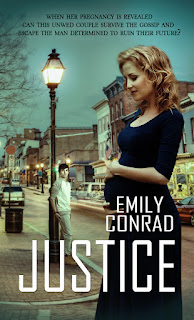
Emily Conrad headshotEmily Conrad writes Christian romance and a blog to encourage women of faith. Her debut novel, Justice, released from Pelican Book Group in 2018. She lives in Wisconsin with her husband and two rescue dogs. She loves Jesus and enjoys road trips to the mountains, crafting stories, and drinking coffee. (It’s no coincidence Justice is set mostly in a coffee shop!) She offers free short stories on her website and loves to connect with readers on social media.

www.emilyconradauthor.com
Facebook.com/emilyconradauthor
Instagram.com/emilyrconrad
Twitter.com/emilyrconrad

https://www.amazon.com/Justice-Emily-Conrad-ebook/dp/B0792HGXQN/JUSTICE

Jake thought he was meant to marry Brooklyn, but now she's pregnant, and he had nothing to do with it. Brooklyn can’t bring herself to name the father as she wrestles with questions about what her pregnancy means and how it will affect her relationship with Jake. If Harold Keen, the man who owns the bookstore across from Jake's coffee shop, has anything to do with it, the baby will ruin them both. Can Jake and Brooklyn overcome the obstacles thrown in their path, and finally find the truth in God's love and in each other?


Amazon
Barnes and Noble

Monday, June 3, 2019

Do People Read Anymore? by Mary Davis


Mary Davis
With the advent of television, radio, computers, video games, and smart phones, do people read anymore?

Of Americans, 78% read at least one book a year. Only one? How sad. What’s even sadder is 22% don’t even read one! But the good news is 78% are reading!

The average number of books read or listened to by American adults in a year is twelve. Since this is an average, some adults were closer to the one book a year mark, while many others were reading far, far more than twelve to have this average as high as twelve, because this includes that 22% who read zero. Having so many voracious readers out there is good news for us authors.

How much time do those 78% of people spend reading? According to a 2017 survey, Americans spent an average of 16.8 minutes a day on leisure reading. This is how it breaks down by gender and age for the average minutes per day.

Gender
~~Women — 19.2
~~Men — 13.2

Age
~~15-19 — 8.4
~~20-34 — 6.6
~~35-44 — 9.6
~~45-54 — 12.6
~~55-64 — 18
~~65-74 — 34.8
~~75+ — 51

Those numbers seem low but understandable with our busy, fast-paced lives. The lowest number for the 20–34 age range makes sense because these are common years to have small children. It’s hard to find time to breathe some days, let alone read. As people’s children get older and move out (hopefully), there is more time to read for fun. Something to look forward to.

But for us writers, the number of minutes is closer to zero if not zero, zilch, zip, none, nada. Now before you get too upset, hear me out. What author can read another author’s novel and not analyze it or pick up some little tidbit to help them in their own writing? Reading fiction is no longer a leisure activity. It just isn’t. Same goes for reading non-fiction, magazines, or even a recipe. Everything goes into the writing mill. An author never knows from whence an idea will spring. Because we write, no activity is leisure, not even TV, or going to the movies. Not even a ride in an ambulance after a car accident. But that’s an entirely different story.

An author never knows what is going to spark into a raging flame of a story. Becoming an author means giving up leisure reading. I have tried to read just for pleasure, and I can’t. But that doesn’t mean I don’t enjoy reading. It’s just no longer a leisure sport . . . but neither is it work.:)

Do People Read Anymore? by Mary Davis #amreading #amwriting


The Daughter's Predicament
Book 2 in the Quilting Circle series

Can a patient love win her heart?

As Isabelle Atwood’s romance prospects are turning in her favor, a family scandal derails her dreams. While making a quilt for her own hope chest, Isabelle’s half-sister becomes pregnant out of wedlock and Isabelle—always the unfavored daughter—becomes the family sacrifice to save face. Despite gaining the attention of a handsome rancher, her parents are pressuring her to marry a man of their choosing to rescue her sister’s reputation. A third suitor waits silently in the wings, hoping for his own chance at love.

Isabelle ends up with three marriage proposals, but this only further confuses her decision. A handsome rancher, a stranger, and an unseen suitor are all waiting for an answer. Isabelle loves her sister, but will she really allow herself to be manipulated into a marriage without love? Will Isabelle capitulate and marry the man her parents wish her to, or will she rebel and marry the man they don’t approve of? Or will the man leaving her secret love poems sweep her off her feet?


MARY DAVIS is a bestselling, award-winning novelist of over thirty titles in both historical and contemporary themes. She is the author of The Widow’s Plight (Book 1 in the Quilting Circle series), “Zola’s Cross-Country Adventure” in The MISSAdventure Brides Collection, “Holly & Ivy” in A Bouquet of Brides Collection, The Prodigal Daughters series from Love Inspired, and Newlywed Games. Coming in 2019, The Daughter’s Predicament (Book 2 in the Quilting Circle series) and “Bygones” in Thimbles and Threads. She’s a member of ACFW and active in critique groups. Mary lives in the Pacific Northwest with her husband of over thirty-four years and two cats. She has three adult children and two incredibly adorable grandchildren.