Wednesday, February 6, 2019

Kicking Your Inner Editor to the Curb by Erin Howard

Everyone approaches writing differently. Whether you plot every detail out or you write as it comes to you, you still have one thing in common. The pesky internal editor. When I first started writing, I didn’t realize this was something I needed to watch out for. I didn’t know that it likes to wait for the right opportunity and rear its ugly head. If I was having a rough day, then all of a sudden, I could only see all the parts of the story I didn’t like. No word count was added, no new words on the page, but I altered and changed everything about the scene and guess what? The next day was the same, and the next. I wasn’t getting anywhere in my story. I was frustrated and took a big break from writing.

One day, I heard another author talking about this very issue, except they said they never edit as they write the rough draft. Whatever comes out in that writing session stays in the document until the whole story is finished. I decided to give it a whirl. I still had half of a novel to finish. At first, it was difficult, almost torture, to tell my perfectionist self not to edit. It was so hard to keep plowing through the story and let myself off the hook.

It got more comfortable over time, and I realized it didn’t matter if it was awful. It didn’t matter if I stumbled around the scene and didn’t quite show enough emotions or use all the senses at that moment. All that mattered was getting the words down on the screen and completing the book.

When I finished the rough draft, I think I actually cried. I did it. I finished a novel! After I celebrated, I got started on the next phase. Editing. I love this phase of writing. I love the quote from Jodi Picoult, “You might not write well every day, but you can always edit a bad page. You can’t edit a blank page.” Get the story down. Lay the foundation, and then get to work making it shine. It doesn’t have to be perfect the first go around. Let yourself off the hook and
write.


~~~~~~ 


Erin R. Howard is a developmental editor, fantasy author of The Kalila Chronicles, and has earned a Bachelor’s degree in Creative Writing/English from Southern New Hampshire University. When she's not writing, Erin enjoys spending time with her family, fueling her craft addictions, and teaching writing workshops. Erin is a member of the American Christian Fiction Writers (ACFW) and the KenTen Writers Group. She resides in Western Kentucky with her husband and three children.

Social Media:

Newsletter: http://eepurl.com/c386-H 


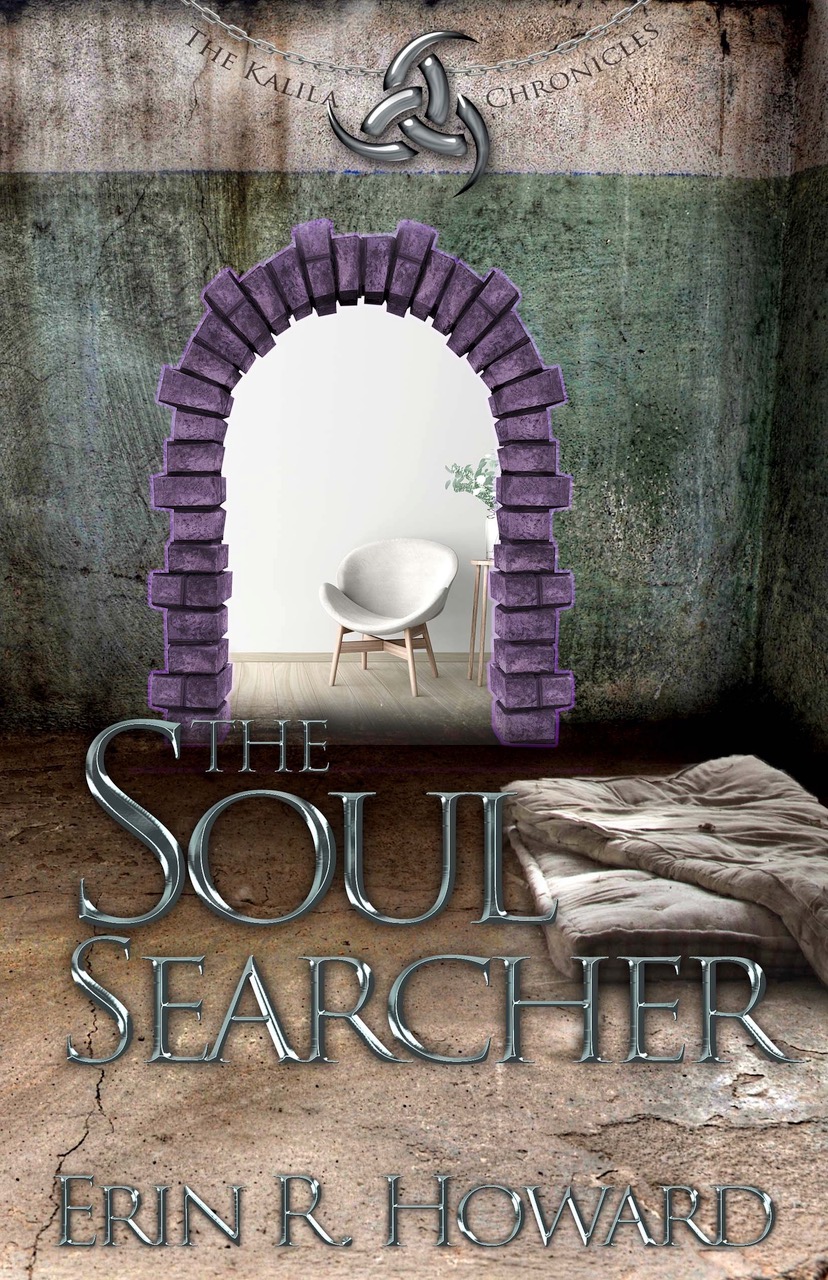
The Soul Searcher (The Kalila Chronicles, #2) - Release Date: 2/19/19

Elnora’s parents gave her one rule:


Stay hidden away at all costs.
Elnora Scott is used to her survival depending on the decisions of others. Locked away in her safe house, it is easy to follow her parents’ dying wishes until an angel, demon, and seer show up on her doorstep. Now, waking up in a dirty cell, she wishes she would have gone with them when she had the chance, because the very ones who unknowingly ushered the kidnapper to her location may be the only ones who can save her.
When Thea learns that Elnora may be in danger, she doesn’t hesitate to go find her. Thea thought stepping through the portal would be her greatest obstacle, but it only reveals a more sinister threat.


Tuesday, February 5, 2019

Is God Telling Me to Stop Writing? By Emily Conrad

Introducing Emily Conrad, one of the rock star regular contributors to Aspiring Author Tuesdays for Seriously Write. She's got a unique voice, one that breaths encouragement and authenticity. She weaves spiritual truth into the common challenges writers face.

I know you'll be blessed by her posts each month.

Is God Telling Me to Stop Writing?

By Emily Conrad

Suddenly, my throat was tight, my eyes watery, and my resolve gone.

I’d gotten a glimpse of how long the road is to my writing dreams, and discouragement over writing pounced. I was tempted to quit.

The day prior, I’d asked God what He wanted for my writing. I jotted down things I can do to further my writing career. It was a short list that amounted to little more than: I can try.

I followed up with a list of things only God can do:

*Only God can supply the words.

*Only God can open the right doors.

*Only God can see the future to direct me in the present.

*Only God can give me the strength to do all things.

All of this (and more) means He’s the boss of this writing endeavor.

And as the boss, only God can fire me.

If you’re a Christian, He’s your boss, too.

This mindset isn’t unique to me. You’ve probably heard it before, as have I.
It’s encouraging right up until discouragement hits hard, and we’re left wondering if this latest discouragement is God’s way of telling us to move on. 

How do we know?
We go back to His Word and learn about who our Boss is and how He operates—and we’d do well to notice, too, who our enemy is and how he operates.

1 Thessalonians provides a nice glimpse of both our Boss and our enemy:

Satan hinders (2:16)
Satan tempts (3:5)
God loves (1:4)
God chooses (1:4)
God approves (2:4)
God empowers (1:5, 2:2)
God tests (2:4)
God calls (2:12)
God avenges (2:16, 4:6)
God sanctifies (3:13, 5:23)
God is faithful (5:24)

Notice Satan’s list is far, far shorter than God’s, and it lacks the power of the verbs associated with our Boss. Looking at these two lists, I identified that the voice of discouragement and condemnation wasn’t my Boss asking for my resignation.

So, instead of quitting, I pictured myself sitting in my Boss’s office, talking through my problem and asking Him what to do.
When I faced setbacks while working in an office, I did that with my human bosses. Funny, my bosses never once said, “Well, I guess you should resign.”

(Okay, actually, when I was a teenager, a trainer did say something like that to me, but that’s a different story ↝ https://emilyconradauthor.blogspot.com/2016/08/stick-with-it.html)

Generally speaking, good bosses don’t do that. Good bosses have hired their employees for a specific purpose that they know those employees are qualified to carry out. Good bosses set their teams up for success. When employees hit a roadblock, a good boss is going to do everything in their power to help their team overcome.

God is not only a good boss, He’s the best.

God opposes the proud but gives grace to the humble. And God will exalt you in due time, if you humble yourselves under his mighty hand by casting all your cares on him because he cares for you. 1 Peter 5:5-7 (NET)

When you work with Him, He’ll promote you at the right time, in the right way. In the meantime, don’t let discouragement or anything else dismiss you from the job He’s given you.

✵✵✵✵✵
Emily Conrad writes Christian romance and a blog to encourage women of faith. Her debut novel, Justice, released from Pelican Book Group in 2018. She lives in Wisconsin with her husband and two rescue dogs. She loves Jesus and enjoys road trips to the mountains, crafting stories, and drinking coffee. (It's no coincidence Justice is set mostly in a coffee shop!) She offers free short stories on her website and loves to connect with readers on social media. 
Connect with Emily:

Jake thought he was meant to marry Brooklyn, but now she's pregnant, and he had nothing to do with it. Brooklyn can’t bring herself to name the father as she wrestles with questions about what her pregnancy means and how it will affect her relationship with Jake. If Harold Keen, the man who owns the bookstore across from Jake's coffee shop, has anything to do with it, the baby will ruin them both. Can Jake and Brooklyn overcome the obstacles thrown in their path, and finally find the truth in God's love and in each other?

Monday, February 4, 2019

Themes that Stick with You by Annette M. Irby


Father and son*

Have you seen the Richard Donner cut of the movie Superman II, with Christopher Reeve? If you haven’t, you should. Apparently, the fans demanded it be made and a decision-maker allowed it. I’m glad they released it. Donner (the director) had a vision for movies I and II, but that vision was cut short when he was let go from the project and another director stepped in.

What Donner did, that the theatrical release version didn’t, was include certain universal themes that made the Donner cut work. Themes, like the relationship between father and son, and what happens when you make an irrevocable decision. What happens when your choice costs someone who loves you more than you can bear to receive. So, so good. 

There is a lot of symbolism of Jesus as Messiah in the Superman lore. Superman is a noble hero. He’s honest, and as Clark Kent, very sympathetic. He just wants to fit in. (Relatable? Yup. Universal? You betcha.) And he’s heroic, of course. Because he’s fighting crime while rescuing people, even when there’s sacrifice involved. 

That’s what makes a noble hero—someone who is determined to help others, even when it hurts. 

The father-son dynamic of Superman II, the Donner Cut, gets to me, touching emotions and fascinating me. I’ve seen this theme in other places. Can the father-figure in a long-running TV series both find a redeeming quality in the felon and convince him to choose nobility over a life of crime? We’re on the edge of our seats watching this play out over several seasons. 

How about the Flash TV series? Lots of father-son dynamics because we have a man who was adopted and whose birth father was jailed for killing his mother—though he’s innocent. Father wounds. Adoptive dad. Choosing to be a hero and lessen another’s pain while in pain.

I’m sure there are other movies or TV series I’ve watched where that element was present, but those three stand out. Perhaps that’s why I included that thread (the father-son dynamic) in all three of the books in my recent series. That theme spoke to me. I didn't set out to explore it, but that's what happened. I got to approach it in three different ways, with different characters—one facet per book. 

Perhaps those threads in each book are meaningful to readers—I don’t know. But they sure were meaningful to me as I wrote about them. 

So, here’s how to use this to your advantage, dear writer. Ask yourself: Are there themes that come up in novels, the Bible, movies, or TV series that move me, or fascinate me? If so, perhaps you’ve found one of the central themes for your next manuscript. Chances are, if a theme speaks to you, it'll speak to others. If it's meaningful to you, it'll impact others, especially as you approach that theme from a place of emotion, passion, exploration.

Once you can pinpoint your favorite theme in a book/movie/series, study how it's treated in that medium. Does it work? If so, why? If not, why not? Did the writer handle it well? How would you handle it? How can you take an original approach to that universal theme?

Write on, friends!


~~~~~
  Releasing March 1
 
FL on Whidbey Island


Could what drove them apart be what draws them back together?

Liberty Winfield lives with loss every day. She’d rather leave her history behind her, but when faced with moving back to her hometown, the past becomes unavoidable. She takes a job at the florist shop owned by her ex-boyfriend’s family from a decade ago. Now he’s unavoidable.

Clay Garrison knows the pain of ruing his mistakes. Most of his regrets center around Liberty. If he could undo his poor choices, he would. Liberty is back. He has one more chance to make things right. She doesn’t believe anyone could love her unconditionally, so he sets out to prove her wrong. He must also try to right the biggest wrong of their past, knowing that in doing so, he could lose her forever.

Will addressing the past together help them find love?


~~~~~


Annette M. Irby**
 

Annette M. Irby has been writing since her teen years when she sat pounding out stories on a vintage typewriter just for fun. Since then, she’s joined Christian writing groups and launched blogs so she could share the joy of writing. She likes to say she’s addicted to color as flowers and seascapes inspire her. In her off hours, she enjoys gardening, photography, and music. She lives with her husband and family in the Pacific Northwest.


Learn more here on her Seriously Write Page.


Links to connect with Annette:
Website: www.AnnetteIrby.com
Twitter: @AnnetteMIrby
Facebook Reader Friends Group: https://www.facebook.com/groups/252272708574760
BookBub: https://www.bookbub.com/authors/annette-m-irby or @AnnetteMIrby
Amazon Author Page: www.amazon.com/author/annette_m_irby.com  
Book Review Blog: www.annetteirbyreviews.blogspot.com


* father-son photo credit: Pixabay
** author photo credit: Sarah Irby

Friday, February 1, 2019

Juggling the Author Life by Melinda V Inman

Melinda V Inman

Juggling the Author Life

Many of us envisioned idyllic times of writing in quiet rooms with little interruption. We would work as long as the inspiration gripped us, pounding out words and emotions onto our laptops. We imagined Jane Austen or Louisa May Alcott in attics or secluded locations. We would record our thoughts with the modern equivalent of their parchment and ink-stained fingers.

Rarely is it like this. Rather, it’s more like juggling.

Many of us rise at 4 or 5 a.m. to grab an hour of writing before we get our family up and off to school, and then we head to work ourselves. Some of us forego sleep, squeezing in our hours of writing long after everyone else in the house slumbers. These are the only hours available.

Some write on the run, driving our kids, watching their activities, perhaps schooling them, and then quickly pounding words onto the laptops we drag along. We hold onto that emotion or that next sentence as we drive from one location to another, chatting with kids and enjoying their stories, all the while hoping we don't lose the inspired thought before the next stop.

Some are full-timers, our entire day circling our writing. But life still happens, bringing repairmen, illnesses, company, emergencies, and cherished interactions with loved ones right into the climax of the novel, pushing us also to be midnight writers and carriers of ideas scribbled into notebooks crammed into our purses.

As with Austen and Alcott in their era, this is the time period in which God had us born. Therefore, we’re writing precisely where he desires.

So, what do we do?

First, we recognize that this tension has always existed for writers. Life happens to every Christian author. Consider, for instance, the apostle Paul. For about three months, he holed up as a houseguest in Corinth. There, under the inspiration of the Holy Spirit, he penned a masterpiece. He also dealt with all the messy problems expressed in the letters to the Corinthians.

There were meetings, meals, disagreements, local church politics, conversations with repentant sinners, sessions with church leaders, and the urgent pressing of the Holy Spirit, all while Paul wrote the letter to the Romans, an organized theological argument filled with powerful doctrine. Three months. Miraculous. With all of those “interruptions,” imagine how he felt as he wrote.

Obviously, we’re not writing Scripture, but we are penning what the Lord has given us for his purposes and the advancement of the Gospel in today’s wider world. That means our words are important. It also means that those “interruptions” are necessary.

When the Lord allows a pause to enter the composition, there’s a real-life person or situation that takes precedence at that time. He pries us away, giving a lesson he wants us to ponder, a point he wants to make. A so-called interruption is, therefore, more like Selah, a term used in the Psalms, a call to pause and to reflect.

This is God’s way of giving us time to interact with him about what comes next and the impact of that particular portion of the story. Rather than merely pounding it into reality, we’re instead forced to step away, stow it in our brains, talk to the Lord about it, and maybe even sleep on it. This produces a sense of writerly frustration, but it’s coupled with our recognition of deeper truths, which are revealed during the wait.

God leads us. Remember that.

The events of our lives are significant and are used by God to shape the piece of writing. Take time to listen to the Lord, to consider the whys of the events that take us from our laptops, and, most importantly, to consult the Lord himself.

Rely on the Holy Spirit. Give the story into his hands. Let him lead.


The Shadows Come

The sequel to No Longer Alone is ready! You can help publish this story. I'm giving away free copies to everyone who does! I'll put your name right inside the book. Come and join me @Patreon! 


Raised on the Oklahoma plains in a storytelling family, Melinda Viergever Inman now spins tales from her writer’s cave in the Midwest. Her faith-filled fiction illustrates our human story, wrestling with our brokenness and the storms that wreak havoc in our lives. Find her weekly at http://MelindaInman.com/blog/. To find her work and to be notified of future published novels, follow her at http://bit.ly/MelindasBooks/.

Connections: