Showing posts with label editing. Show all posts

Monday, December 7, 2020

Copyediting is Subjective by Annette M. Irby


There are as many editorial preferences as there are editors.

Publishers generally have in-house style guides for their editors and authors. Their teams can reference those guides to answer stylistic questions, especially when trusted, outside sources vary or fail to cover the topic in question.

Below, I’ll share examples of preferences that may vary among editors and publishers.

Wednesday, November 18, 2020

Before You Hit Send… by Patty Smith Hall

At various times in my writing career, I’ve been in the unique position of being a deciding factor in whether a manuscript was accepted for publication or not. As a first reader for Harlequin and now as an editor for Winged Publications, I’m often the first person to see your manuscript after you hit send. 

So many times, I wish I could have caught the writer before he or she hit send. Then I would have shared the five things to do before you send your manuscript off.

Wednesday, October 14, 2020

The Art of Juggling by Susan Anne Mason

I never realized that being an author would mean learning to juggle. Not that I hadn’t been prepared by my ‘pre-publication’ life. After all, I juggled being a wife, a mother, a daughter, and a church secretary. Plus, I wrote in my spare time.

And you’d think that with my twelfth published novel coming out on October 13th, I’d have this writer’s job down pat. But these last few weeks have proven me wrong.

Wednesday, September 23, 2020

Grab the Polish by Sandra Ardoin

Last month, we talked about the need for an editor for your work. Afterward, I was asked to write about finding an editor and the possible costs involved, so I thought I’d concentrate on that in this month’s post.


How do I go about finding the right editor for my work?

Wednesday, July 1, 2020

Looking Forward to a New Adventure by Shannon Taylor Vannatter

From the moment I finally got a publishing contract, after nine and a half years and over two hundred rejection letters, I wanted to help other writers achieve their dream. I started by teaching classes, even though I’m an introvert. My least favorite thing to do is be the center of attention or get up in front of people. Especially if I have to say something. But writing changed all that. I had this burning need to share what I’d learned, what it takes to get published, and to help others learn from the mistakes I’d made along the way.

Wednesday, June 24, 2020

3 Things I've learned as a Publisher that Make Me a Better Author by Misty M. Beller

As a full-time writer, I’ve been published by both small and large presses, as well as publishing many of my books myself. For years, I’d been mulling over the idea of starting my own small press, but never felt that peace in my spirit that comes from knowing a decision is God’s will. Then at the beginning of 2018, things began to change. I felt God saying, “Yes. Now.”

Tuesday, March 3, 2020

The Truth About the Writers We All Admire by Emily Conrad

stack of books
 
I have a friend who has a knack for writing striking devotionals. Despite their short length, she manages to pack memorable images and messages into just a few lines with finesse I admire (and honestly envy a bit).

Ironically, last week this friend surprised me by saying that when she writes a short non-fiction piece she’s happy with, she calls it “doing an Emily.”

Um, what?

I laughed and told her I have a document on my computer where I have over twenty pages of started and (so far) failed blog posts. (Since I’m drafting this post in said document right now, I can report that the true number of pages is thirty-five.)

I don’t remember exactly why I named this working document August, but I think I had ambitions of writing my posts for the month of August early one year, so I created a file in which to do so.

Word tells me that since I created the file in July, 2016, I’ve spent over 1000 hours editing it. I have no count of the hours I’ve spent editing directly in Blogger, where both Seriously Write and my personal blog are hosted, but they are many.


handwritten notebook


Writing is a way of life. A way of processing. But not every word is worth sharing, and those that are often do not come easy or fast.

As well as I know this about my own writing, I can forget when I read others' work.

We often only see the end result of each other's efforts. The heavily edited words, the final drafts.

Even between close friends who routinely help each other with critiques, sometimes we're unaware of what happens behind the scenes. My own friend, one who's heard my complaints about coming up with topics for posts and whom I believe I knew when I created August, didn't know such a file existed.

So, for the record, I have pages and pages of failed blog posts. I have entire novels on my hard drive that will likely never see publication. Poems. Stories. At least one essay.

So. Many. Documents.

I haven't gone rummaging through other writers' hard drives, but I don't have to see the deleted or ignored documents to know that those whose words I value also try and fail.

Writing is a struggle, and none of us are immune.

Behind each admirable piece, there’s an awful lot of work, false starts, and undeserved grace.

You may feel like you’re trying hard. Why does it come so easy to everyone else?

For the most part, it doesn't.

string of lights in open book


Good writing comes through God’s empowering grace. It comes through perseverance. It comes through showing up and putting in the hours quietly, in spaces no one will see.

No one but God, that is.

Jesus sees what we do in secret and will reward us for being faithful. When we submit to the humility of trying and failing, of working behind the scenes, of learning one word at a time, He does a work in us we cannot force. He sharpens skills and brings out the vibrant colors of a masterpiece.

Resting in this, we can set aside jealousy and comparison. We don't have the full picture of others' journeys to really compare to anyway.

On the level playing field of grace, writers are free to help and support each other, knowing that in due time, God will use everything we submit to Him.

Even that file of false starts.

Writing is a struggle, and none of us are immune. Behind each admirable piece, there’s an awful lot of work, false starts, and undeserved grace. via @emilyrconrad #amwriting #amediting #seriouslywrite @MaryAFelkins

On the level playing field of grace, writers are free to help and support each other, knowing that in due time, God will use everything we submit to Him. @emilyrconrad #writing #faithwriter #seriouslywrite @MaryAFelkins

Good writing comes through God’s empowering grace. It comes through perseverance. It comes through showing up and putting in the hours quietly, in spaces no one will see. @emilyrconrad #seriouslywrite #writetip #writing @MaryAFelkins

Photo credits
String of lights on open book photo by Nong Vang on Unsplash
Stack of books photo by Toa Heftiba on Unsplash
Handwritten book photo by Kiwihug on Unsplash
_______________________

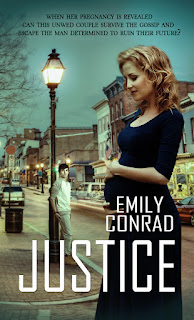
Emily Conrad headshotEmily Conrad writes Christian romance and a blog to encourage women of faith. She lives in Wisconsin with her husband and two rescue dogs. She loves Jesus and enjoys road trips to the mountains, crafting stories, and drinking coffee. (It’s no coincidence her novel Justice is set mostly in a coffee shop!) She offers free short stories on her website and loves to connect with readers on social media.

www.emilyconradauthor.com
Facebook.com/emilyconradauthor
Instagram.com/emilyrconrad
Twitter.com/emilyrconrad

https://www.amazon.com/Justice-Emily-Conrad-ebook/dp/B0792HGXQN/JUSTICE

The love of a lifetime, a quest for justice, and redemption that can only be found by faith.

Jake thought he was meant to marry Brooklyn, but now she's pregnant, and he had nothing to do with it.

Brooklyn can’t bring herself to name the father as she wrestles with questions about what her pregnancy means and how it will affect her relationship with Jake.

If Harold Keen, the man who owns the bookstore across from Jake's coffee shop, has anything to do with it, the baby will ruin them both.

Can Jake and Brooklyn overcome the obstacles thrown in their path, and finally find the truth in God's love and in each other?

Amazon
Barnes and Noble

Tuesday, December 3, 2019

Editing Our Thoughts as Carefully as Our Words by Emily Conrad

fountain pen writing

I have a critique partner who rightly gets after me for using “weasel words.”

As she reviewed my latest manuscript, she drew my attention again and again to words like was and it. Reminded to choose my words more carefully, I noticed others she didn’t point out as often—that, just, finally, and now.

Realizing I’d let my attention to varied, vibrant language slip, I used the search function to highlight every one of those six words in the entire manuscript, then reviewed every. Single. Instance. Of each of them.

Some, I left. Many, I rewrote.

The task took considerable time, but the manuscript shines for the effort. (To get a feel for the impact, consider whether that sentence would carry the same punch if I’d written: It was time-consuming, but the manuscript shines because I did it. Now multiply that by an entire novel.)

After I tamed the weasels in my work-in-progress, however, I noticed another kind of weasel posing an even bigger threat to my writing.

Weasel thoughts.

You know the ones:

God isn’t using me.

I’m all on my own.

My manuscripts will never be accepted by an agent or editor.

I could never write like she does.

And on and on.
fountain pen with ink dot

These negative thoughts, like words we so easily overuse, creep in when we’re not vigilant.

If we let the issue go unaddressed, those weasels grow bigger and multiply, fed by each rejection, setback, and disappointment. Soon, they run as rampant in our minds as weasel words can in our manuscripts.

The more we think them, the more we believe them. The more we believe them, the less we’ll write.

So, as we strive to improve in our writing craft, let’s also carefully manage our thoughts.

The trick with editing a manuscript for weasel words is not simply to delete every sentence containing one but, rather, to reword the line for the strongest impact.

With weasel thoughts, instead of rewording to convey the same meaning, we need to replace the negative with a faith-filled positive.

God isn’t using me becomes God has good purposes for me. (Jeremiah 29:11, Ephesians 2:10)

I’m all on my own becomes The Lord goes with me. (Matthew 28:20, Joshua 1:9)

My manuscripts will never get accepted by an agent or editor becomes God will open the right doors for me at the right time. (Psalm 138:8, 1 Peter 5:6)

I could never write like she does becomes I have been gifted in a unique way for a unique purpose. (1 Corinthians 12:12-14)
Fountain pen that's written the word love

Weasel words will overrun our writing. Weasel thoughts will prevent us from writing in the first place. Both can prove to be challenging opponents, but you're not in this journey alone.

Friends, both inside and outside the writing world, can help pinpoint weasel thoughts and might be able to point you to Scripture that can combat the problem.

And, of course, prayer should be an important part of the editing process--whether we're talking weasel words or thoughts. God is concerned with every aspect of our lives, and invites us to bring our cares to Him.

Weasels are no match for the One who can do all things.
_____________________

P.S. Want some help finding the weasel words in your manuscript? Kregel editor Janyre Tromp created a list of 75 words to look out for in your work. As she wisely warns us, the key isn’t to delete them all, but to ensure that each instance is necessary. You can snag a copy (and benefit from the wisdom of two professional editors in other areas, too) by joining the Facebook group Editing Insiders with Janyre and Sarah. Once you’re in, search the group’s posts with the word “download” to find the link.


_____________________

Weasel words will overrun our writing. Weasel thoughts will prevent us from writing in the first place. @emilyrconrad shares thoughts on #editing out both as a #Christianwriter #seriouslywrite

Weasel thoughts. The more we think them, the more we believe them. The more we believe them, the less we’ll write. @emilyrconrad #writing #christianfiction #seriouslywrite

Negative thoughts, like words we so easily overuse, creep in when we’re not vigilant. @emilyrconrad #seriouslywrite #writetip #writing


Photo credits
Fountain pen writing photo by Aaron Burden on Unsplash

Pen with ink dot photo by Nicolas Thomas on Unsplash

Love fountain pen photo by John Jennings on Unsplash

Graphics created on Canva.com


Emily Conrad headshotEmily Conrad writes Christian romance and a blog to encourage women of faith. Her debut novel, Justice, released from Pelican Book Group in 2018. She lives in Wisconsin with her husband and two rescue dogs. She loves Jesus and enjoys road trips to the mountains, crafting stories, and drinking coffee. (It’s no coincidence Justice is set mostly in a coffee shop!) She offers free short stories on her website and loves to connect with readers on social media.

www.emilyconradauthor.com
Facebook.com/emilyconradauthor
Instagram.com/emilyrconrad
Twitter.com/emilyrconrad

https://www.amazon.com/Justice-Emily-Conrad-ebook/dp/B0792HGXQN/JUSTICE

The love of a lifetime, a quest for justice, and redemption that can only be found by faith.

Jake thought he was meant to marry Brooklyn, but now she's pregnant, and he had nothing to do with it.

Brooklyn can’t bring herself to name the father as she wrestles with questions about what her pregnancy means and how it will affect her relationship with Jake.

If Harold Keen, the man who owns the bookstore across from Jake's coffee shop, has anything to do with it, the baby will ruin them both.

Can Jake and Brooklyn overcome the obstacles thrown in their path, and finally find the truth in God's love and in each other?


Amazon
Barnes and Noble


Wednesday, September 4, 2019

Commitments to Your Characters by Janet Sketchley

With my newest release, Hidden Secrets, I was strongly tempted to publish without using an editor. Sure, I’d needed one for each of my previous books, but the manuscript felt good to me. I’d self-edited it many times, and after three novels and a novella, I had a pretty good handle on this writing thing. Plus I’m blessed with naturally good spelling and grammar.

Are you laughing yet?

My editor is, if she’s reading this post.

Common sense said the professional thing to do was to find an editor. Find, because the editor of book one, Unknown Enemy, had moved on to other work. I’d heard good things about Brilliant Cut Editing, and when Deirdre agreed to squeeze me into her schedule, I sent off my manuscript.

She’d find a few things to tweak, I expected, and I should be on track for a fast revision and a late 2018 publication date.

You’ll notice it’s now summer 2019 and I’m writing about my “new release.”

The document came back with 926 comments. Nine hundred twenty-six. And a cover note about it being pretty raw in places.

As well as assigning a mountain of work, the comments identified strong points and those which could become even stronger. So many of them addressed punctuation errors that I’ve dubbed myself the queen of misplaced commas and run-on sentences.

Writing can be humbling. But I’d far rather be humbled by editors and beta readers—who are on my side—than by readers and reviewers after publication.

I remember working on my first novel, Heaven’s Prey, and rewriting for years. My commitment to my characters was that as long as I could learn to do better with their story, I’d keep revising. Working with a trusted editor, beta readers, cover artist, and any other necessary resources, is part of keeping that commitment. We writers owe it to our characters.

What promises have you made to your characters as you write?


I’d far rather be humbled by editors and beta readers—who are on my side—than by readers and reviewers after publication. via @JanetSketchley #SeriouslyWrite #amwriting

~~~~~~


Janet Sketchley is an Atlantic Canadian writer who likes her fiction with a splash of mystery or adventure and a dash of Christianity. Why leave faith out of our stories if it’s part of our lives? You can find Janet online at janetsketchley.ca.

The secrets of Captain Hiltz may not have died with him.

When Landon Smith returns to the Green Dory Inn, she finds innkeeper Anna Young still shaken by the recent vandalism and unable to cope when the inn is targeted in an online vendetta. Prickly neighbour Bobby Hawke can help with Anna’s cyber woes, but when the attacks escalate to physical threats, Landon and Bobby must work together to unmask the culprit.
A cryptic message about a tunnel points to the property’s original owner, a notorious Prohibition-era sea captain rumoured to have left hidden wealth. Contraband, treasure, evidence of things better left buried…
How far will Anna’s enemy go to claim the tunnel and its contents? Protecting Anna will require courage and faith as Landon battles the locals’ attitudes and the scars of her past. Even then, she and Bobby are tracing the faintest of clues. With Anna on the brink of emotional collapse—and danger rising like the tide—time is running out.

Monday, April 1, 2019

Taking Deep Point of View Even Deeper by Annette M. Irby

Woman writing in notebook at a park*
We’ve talked before on Seriously Write about deep POV (point of view). I still highly recommend Jill Elizabeth Nelson’s book Rivet Your Reader with Deep Point of View.

To impact readers, we must help them engage with the main characters (MCs), especially those who lend us their point of view during the novel. This way, readers can:

1) find ways they relate, so they won’t feel left out of the novel.
2) possibly (and hopefully) be emotionally impacted by the story.
3) live vicariously through your POVC’s (point-of-view character’s) adventure.

Let’s dig a little deeper into an aspect that will let us into your POVC’s experience. In my work as an editor, I’ve noticed that there can sometimes be a lack of what I call the realization-then-reaction cycle. This is somewhat different from scene building (Dwight Swain’s motivation-reaction units). It’s introspective, meaning the character’s thoughts are central.

To delve deeper into deep POV, have characters do two things:

1) realize/recognize what they perceive is happening and put it on the page

2) and then react to that realization, again, on the page.

Now, of course, you can overdo it, so be intentional. But this cycle is what we do in real life. By employing the realization-then-reaction cycle, you’re:

1) Creating tension: What if the MC is offended by what they perceive just happened? What if they feel justified in their unforgiveness, etc.? So many possibilities.

2) Leveraging deep POV: We’re in the MC’s head, let’s experience what he’s thinking and feeling. We aren’t watching a movie; we’re reading a novel. It’s a deeper POV experience and one readers expect when they pick up your book.

3) Providing a logical flow (study MRUs for more on this). If your MC does not at least think about what’s happening, readers wonder if the MC is dense. Doesn’t he see what just happened? And after the MC acknowledges what just happened, readers want to see how it impacts them.

4) Answering (and raising) readers’ questions. Readers wonder if they “read that right,” so giving us the MC’s perception answers the questions. You can also raise more questions by having the MC be confused or point out something else for readers to wonder about.

5) Creating conflict: Your POVC cannot necessarily perceive correctly both the actions and motivations of other characters. This oh-so-relatable challenge can lead to great conflict between characters, including misunderstandings, distrust, etc.

Readers are trusting the POVC to paint her world, both the outer story world and her inner world (thoughts, feelings, etc.) for us. If we aren’t given their understanding (perception) of outward events, we’ll feel kept at a distance. If we aren’t then given their reaction to those realizations (how what has happened makes her feel), your character won’t feel believable. She will feel two-dimensional rather than layered.

Perhaps writers skip this logical inward flow because they aren't fully in their character's head, or the emotions are too intimidating. I’m unsure why they leave out realizations and reactions, but I can tell you when, as a reader, I perceive life along with the MC and then I feel her reaction, I relate! I’m sure this is true for you too.

In my Whidbey Island novel that released March 1, I include a situation where the heroine carries anger for a decision the hero made years ago—a decision that impacted her in a painful way. During their conversation about this touchy subject, I have the heroine perceiving what the hero might be thinking by watching his body language. This is what we do in real life. She may even read into his words and project what she thinks he’s feeling onto him. Again, human behavior. One of my early readers said she could so relate with the heroine in that scene. She felt the character’s indignation. (Three cheers when that happens, right?!) Anytime we can help readers feel what our characters feel, we’ve accomplished a grand part of our goal—to give readers an emotional experience. That’s what makes them search out your books again and again. That’s what builds your readerly tribe.

Then, when you’re in the other POVC’s head, you can paint the scene from their perspective as they recall how it happened. In my Whidbey novel,we find the hero deeply regrets his past decision and would change it if he could. He’s determined to find a way to make up for his selfishness in the present, if she’ll let him. See, he’s likable! That’s how you leverage deep POV. That’s how you keep your reader both hooked and cheering for both of your MCs (in a romance, specifically), though they are seemingly on opposing sides, at least in the beginning.

Your turn: What tips do you have for delving more deeply into deep POV? What works for you as a reader? What works for you as a writer? I’d love to see your ideas.

Write on, friends!

Taking Deep Point of View Even Deeper @AnnetteMIrby #writingtips #SeriouslyWrite


FL on Whidbey Island, Washington
Could what drove them apart be what draws them back together? Liberty Winfield lives with loss every day. She’d rather leave her history behind her, but when faced with moving back to her hometown, the past becomes unavoidable. She takes a job at the florist shop owned by her ex-boyfriend’s family from a decade ago. Now he’s unavoidable.

Clay Garrison knows the pain of ruing his mistakes. Most of his regrets center around Liberty. If he could undo his poor choices, he would. Liberty is back. He has one more chance to make things right. She doesn’t believe anyone could love her unconditionally, so he sets out to prove her wrong. He must also try to right the biggest wrong of their past, knowing that in doing so, he could lose her forever. Will addressing the past together help them find love?


~~~~~

 
Annette M. Irby has been writing since her teen years when she sat pounding out stories on a vintage typewriter just for fun. Since then, she’s joined Christian writing groups and launched blogs so she could share the joy of writing. Her book, Finding Love on Bainbridge Island, Washington, finaled in the Selah Contest in 2019. Flowers and seascapes inspire her. In her off hours, she enjoys gardening, photography, and music. She lives with her husband and family in the Pacific Northwest. Learn more here on her Seriously Write page.


Links to connect with Annette:
Website: www.AnnetteIrby.com
Twitter: @AnnetteMIrby
Facebook Reader Friends Group: https://www.facebook.com/groups/252272708574760
BookBub: https://www.bookbub.com/authors/annette-m-irby or @AnnetteMIrby
Amazon Author Page: www.amazon.com/author/annette_m_irby.com
Book Review Blog: www.annetteirbyreviews.blogspot.com

* woman writing photo credit: Pixabay
** author photo credit: Sarah Irby

Wednesday, February 6, 2019

Kicking Your Inner Editor to the Curb by Erin Howard

Everyone approaches writing differently. Whether you plot every detail out or you write as it comes to you, you still have one thing in common. The pesky internal editor. When I first started writing, I didn’t realize this was something I needed to watch out for. I didn’t know that it likes to wait for the right opportunity and rear its ugly head. If I was having a rough day, then all of a sudden, I could only see all the parts of the story I didn’t like. No word count was added, no new words on the page, but I altered and changed everything about the scene and guess what? The next day was the same, and the next. I wasn’t getting anywhere in my story. I was frustrated and took a big break from writing.

One day, I heard another author talking about this very issue, except they said they never edit as they write the rough draft. Whatever comes out in that writing session stays in the document until the whole story is finished. I decided to give it a whirl. I still had half of a novel to finish. At first, it was difficult, almost torture, to tell my perfectionist self not to edit. It was so hard to keep plowing through the story and let myself off the hook.

It got more comfortable over time, and I realized it didn’t matter if it was awful. It didn’t matter if I stumbled around the scene and didn’t quite show enough emotions or use all the senses at that moment. All that mattered was getting the words down on the screen and completing the book.

When I finished the rough draft, I think I actually cried. I did it. I finished a novel! After I celebrated, I got started on the next phase. Editing. I love this phase of writing. I love the quote from Jodi Picoult, “You might not write well every day, but you can always edit a bad page. You can’t edit a blank page.” Get the story down. Lay the foundation, and then get to work making it shine. It doesn’t have to be perfect the first go around. Let yourself off the hook and
write.


~~~~~~ 


Erin R. Howard is a developmental editor, fantasy author of The Kalila Chronicles, and has earned a Bachelor’s degree in Creative Writing/English from Southern New Hampshire University. When she's not writing, Erin enjoys spending time with her family, fueling her craft addictions, and teaching writing workshops. Erin is a member of the American Christian Fiction Writers (ACFW) and the KenTen Writers Group. She resides in Western Kentucky with her husband and three children.

Social Media:

Newsletter: http://eepurl.com/c386-H 


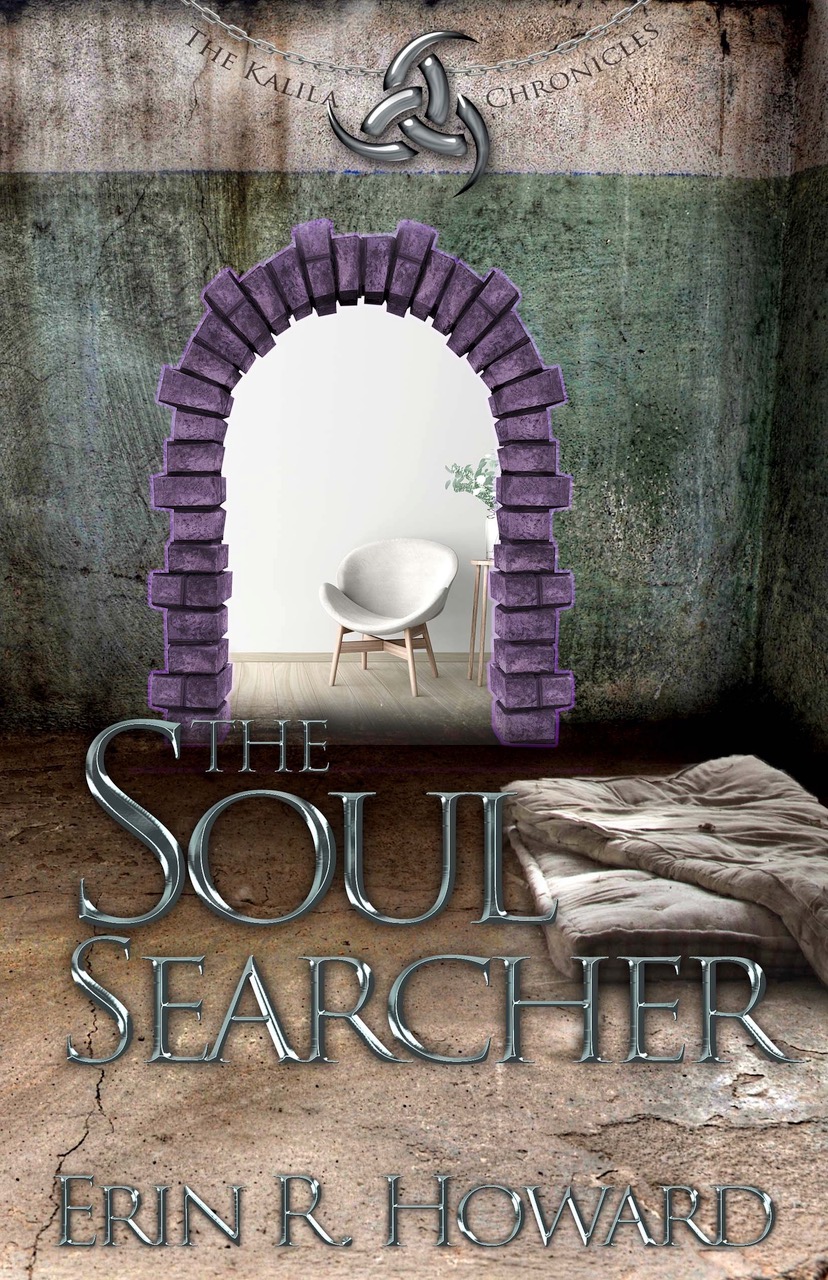
The Soul Searcher (The Kalila Chronicles, #2) - Release Date: 2/19/19

Elnora’s parents gave her one rule:


Stay hidden away at all costs.
Elnora Scott is used to her survival depending on the decisions of others. Locked away in her safe house, it is easy to follow her parents’ dying wishes until an angel, demon, and seer show up on her doorstep. Now, waking up in a dirty cell, she wishes she would have gone with them when she had the chance, because the very ones who unknowingly ushered the kidnapper to her location may be the only ones who can save her.
When Thea learns that Elnora may be in danger, she doesn’t hesitate to go find her. Thea thought stepping through the portal would be her greatest obstacle, but it only reveals a more sinister threat.


Wednesday, July 18, 2018

Two Writing Tips (Bonus: Helpful References) by Joanie Bruce

If you dream of becoming an author, I hope you will find something helpful in this post. I remember how thirsty I was for information on writing techniques and tips when I first started writing. Being able to talk to an author and ask questions would have been amazing, but fortunately (for them) I knew no authors personally to pester. (lol) In this post I’d like to share two of the most important tips I’ve learned about writing as well as some of my most valuable resources.

1)Listen to and learn from your critics.

Hearing harsh words about your new “baby,” (your story) hurts … especially when you receive that first one-star review. Man, did it smart! But when I listened to the reasons for the low rating, I almost always learned something. If one reader doesn’t like it, then there are bound to be others who feel the same way. Granted, sometimes they say, “I just didn’t like it,” or “It wasn’t my thing,” and that teaches you nothing as a writer, but most critics have a reason they dislike the book. Even if you don’t agree with them, look long and hard at their suggestions before you ignore them. My writing improved little by little, and some of it was because I studied the bad reviews and tried to improve upon those weaknesses.

And I’ll let you in on a little secret … even the best-of-the-best writers have bad reviews, lots of them … even one-star reviews. So if you receive a bad review, consider yourself right up there with the big-time authors. You’ve arrived. 😊

2) Read your manuscript out loud before you send it to the publisher.

My husband loves to listen to my completed manuscript before I send the final draft to my publisher, and I almost always find typographical or grammatical errors while reading it to him. I think reading out loud works because while reading the story this way, you read slower than you do when you read silently. Try it. I think you will like it. 😊

And for the last tip of the day, I would like to share with you several links to my favorite writing resources. Every person has their own style and way of doing things, so I’m not saying all the references I recommend will suit everyone, but I hope you will find something in this post to help you eventually get your own book published.

Thank you for reading my post, and I hope you will feel free to message me if you have any type of questions about your writing.

Joanie's Recommended Resources:

Evoking emotions for your reader: The Emotional Craft of Fiction by Donald Maass: https://amzn.to/2N3O9he

Self-editing for Fiction Writers by Renni Browne and Dave King: https://amzn.to/2uodg6G

Rivet your Readers with Deep POV by Jill Elizabeth Nelson: https: https://amzn.to/2unvN2W

The Emotional Thesaurus by Becca Puglisi and Angela Ackerman: https://amzn.to/2KLvvxT

The Emotional Wound Thesaurus: https://amzn.to/2mac3MM

The Positive Trait Thesaurus: https://amzn.to/2utStPt

The Rural Setting Thesaurus: https://amzn.to/2JbKZWv

The Urban Setting Thesaurus: https://amzn.to/2umd8EW

Conflict and Suspense by James Scott Bell: https://amzn.to/2L6hkje

Mystery Writers Handbook by the Mystery Writers of America: https://amzn.to/2L2v1D8

Techniques of the Selling Writer by Dwight V. Swain: https://amzn.to/2KOjkAq


Do you have any writing resources you can recommend?


~~~~~~


As an avid reader, Joanie welcomed the transition from reading to writing and considers it a wonderful way to honor the Lord. She has written three published Christian suspense novels, a Christmas Trilogy, and a novelette. As an artist, Joanie recently illustrated a picture book which released in April.  She lives with her husband on their Black Angus cattle farm and enjoys writing and painting from her home in the country. She also enjoys playing with her grandson, various hobbies, and taking long walks on the farm.

Wednesday, November 22, 2017

Ditch the Diva by Susan M. Baganz, Editor with Pelican Book Group

Most authors are so grateful for a book contract that they’ll do anything to please their editor. It can be a challenge when the editor doesn’t agree with something in a manuscript. What hills does an author defend or surrender on? How can you do that diplomatically when most communications are done via the tracking changes in a document file?

I’ve seen both extremes. Some authors are afraid to ask questions, even when they have a right to and should. Others make demands and badger the publisher with two-year-old temper tantrums.

Those we call divas. They are not fun to work with. They believe themselves to be experts and delight in pointing out editor errors forgetting one key reality: we are all flawed human beings. No one is an expert in this field. I’m learning new things all the time.

I’ve been treated with grace by some authors who have, in spite of distance, become friends and I’ve had others that I dread working on their books, even though they are well-written, simply because of the “attitude” I get from them in their communications.

When I first started I had one author who was a bit abrupt with her emails and I told my boss that I didn’t think she liked me. I joked that it must be because she didn’t tell me how awesome I was. Because I work for a smaller publishing house. I get paid based on the sales of every book I edit. That means my time is initially uncompensated for and I am motivated to do my best because the author’s sales impact my eventual income.

I don’t look at the sales numbers for my authors. A good book is one I’ll enjoy working on,

knowing it can impact lives. When even an entertaining, well-written story is accompanied by a diva attitude—I’d gladly forgo great sales to avoid working with that author again if I had the opportunity.

So, what can an author do? Be respectful and honest. Remember that your editor has a life. I’m an outside contractor and I’m not obligated to get your book done by your schedule. I have a family and face challenges that I need to deal with just like every other human being. I also have my own process for how I work and I try to honor that because it gives me the best results. If I’m forced to rush or shortchange that process you might find more errors in your work.

Editors are humans too, and it’s a small industry. Try to stay on your editor and publisher’s good side because in the long run, you’ll benefit, and we’ll all enjoy the process so much more.

Do you have questions for Susan that will help you better understand an editor's job?


~~~~~~


Susan M. Baganz chases after three Hobbits and is a native of Wisconsin. She is an Editor with Pelican Book Group’s imprint: Prism Book Group, specializing in bringing great romance novels and novellas to publication. Susan writes adventurous historical and contemporary romances with a biblical world-view.

Susan speaks, teaches and encourages others to follow God in being all He has created them to be. With her seminary degree in counseling psychology, a background in the field of mental health, and years serving in church ministry, she understands the complexities and pain of life as well as its craziness. She serves behind-the-scenes in various capacities at her church. Her favorite pastimes are lazy ones—snuggling with her dog while reading a good book, or sitting with a friend chatting over a cup of spiced chai latte.

Find Susan on Social Media:

www.susanbaganz.com

www.twitter.com@susanbaganz

www.facebook.com/susanmbaganz

www.pinterest.com/silygoos

www.youtube.com/susanmbaganz


The Virtuous Viscount (Book 1)
Lord Marcus Remington has decided it is time to find a wife. He didn't expect her to be in the wreckage of a carriage in the middle of a spring storm, but rescuing Miss Josephine Storm challenges his heart and very character of the man known as the Virtuous Viscount. But when the injured young woman weighs heavy on the viscount's mind, convention goes out the window. As Miss Josephine Storm recovers her physical health, her heart is in even more danger. When The Black Diamond's plot to take over Britain puts Marcus and his friends in the criminal's cross-hairs, Josie's life is threatened. Marcus must chance losing her good favor and risk his virtuous reputation in order to save her life. Can Josie believe in the man she thought she knew when the facts say otherwise?

Monday, September 25, 2017

Let’s Talk about Dashes by Annette M. Irby


Red pencil*

Writers have often asked me as I'm editing their projects: what is the difference between dashes? Let’s take a look at three of them and see if we can clear up any confusion.


Three Types of Dashes

There are three types of dashes fiction writers will use most often:

Hyphen: -
En dash: –
Em dash: —

(Note the length of each, which is how we tell them apart and how we know when to use each of them.)


Uses of Dashes

Let’s begin with the first one. A hyphen is used for compound adjectives or other words, names, as well as single letter or first sound stuttering. Hyphens are also used in phone numbers, social security numbers, and ISBNs (yay!). One would also use hyphens to divide single letters when a word is spelled out. Examples:

Broken-down car

Mrs. Smith-Waters

800-555-1234

My last name is spelled: r-i-l-e-y

Y-y-you’re right!

Th-thank you!


An en dash is a little longer than the hyphen and is used for date ranges, as well as Scripture references that include more than one verse. This dash is also used to show sports’ scores. Think of this dash as the word “to” in order to determine whether this dash is needed in your sentence. Examples:

1944–1945

May 3–4, 2018

Jeremiah 29:11–13

The team won 7–4.


An em dash is used often for instances like whole-word stutters, interruptions, and set-apart clauses. Examples:

I–I don’t understand.

“Wait a sec—”

If you don’t mind—and I’m not saying you would—here are the paint choices for this room.

“I can’t tell”—she motioned between us—“which one of you is lying.” (Notice the order here. The em dashes are outside the quotation marks on either side, because they are used to set off the gesture.)


Additional Information

There are also combined en dashes, and combined em dashes, but that’s getting a little involved for our needs. Fiction editors use the Chicago Manual of Style to ensure the proper use of dashes. You can learn more by studying CMS 6.75–94. 

Write on, friends!


~~~~~

Will keeping his promise lead to another broken heart—or help them find love again?

FLI Friday Harbor by Annette M. Irby
Professor Mikaela Rhoades has a plan: she’ll encourage her students’ marine biology research through an exclusive program while helping an old family friend’s whale touring business stay afloat. The challenge is the tour captain is her first love and ex-fiancé. Mikaela longs to help his family in the wake of his father’s death, but she’s keeping secrets. She’ll have to face her past and overcome her concerns about the future to make it through the summer. 
Captain Hunter Cahill has taken over the family touring business after his father’s death. Unfortunately, he’s drowning in grief and debts. He’s hoping the incoming stodgy professor will help resurrect the failing business, but he’s not prepared when that professor turns out to be Mikaela, his former fiancée. To make matters more difficult, he’d promised his father to pursue her if she ever returned to the island single. The more time they spend together, the easier it is to keep that promise, though she still plans to leave at the end of the season. How much will it cost him to spend the summer romancing Mikaela?
~~~~~
Annette M. Irby
Annette M. Irby has been writing since her teen years when she sat pounding out stories on a vintage typewriter just for fun. Since then, she’s joined Christian writing groups and launched blogs so she could share the joy of writing. She likes to say she’s addicted to color as flowers and seascapes inspire her. In her off hours, she enjoys gardening, photography, and music. She lives with her husband and family in the Pacific Northwest.
Learn more on her Seriously Write Page.
Links to connect with Annette:

Twitter: @AnnetteMIrby
Facebook Reader Friends Group: https://www.facebook.com/groups/252272708574760

Photo credit: Pixabay
Author photo credit: Sarah Irby of Irby Photography