Showing posts with label details. Show all posts

Thursday, February 27, 2014

Spare Me the Details by Susan Page Davis

Susan Page Davis
While writing The Prisoner’s Wife (my novel in the New England Romance Collection), I had to learn a lot about the Maine/Massachusetts legal system in colonial days. A quirk of the law led me to write this story, about a marriage intended not to last that turned out to be one of those forever unions.

My research included a trip to the old jail (Old Gaol) in York, Maine, with three of my children. We had a wonderful day, and I highly recommend a day touring Old York to anyone who has the chance. (Learn more about The Museums of Old York at http://www.oldyork.org/ )

While we were there, we toured the Jeffers Tavern and several historic houses, in addition to the Old Gaol. I learned many intriguing tidbits, but they weren’t all suitable for my story.

Did the man who beat his wife to death with a codfish make it into my story? No.

Did the fascinating mourning samplers on display in one of the houses made it into my book? No.

Did the pleached alley or the herb garden or the secret hiding place in the fireplace… You guessed it, they did not.

But all of these things are still in my mind and may show up in one form or another in another story. Immersing ourselves in the past for a day gave us a feeling for early times and the way people lived in them.

But not all the things I dig up in research can go in the book.

My first book, Protecting Amy, was also a historical romance. In it, several cavalry troopers were protecting a young woman. When confronted by a band of bad guys, they made a stand. The story is pre-Civil War, and they used muskets. The loading process takes time. I went over the steps with my husband, a former gunsmith. I wanted the reader to understand how agonizing it was to have to reload after every shot, so I described that in detail in the story.

My editor cut it all out. He wrote a note to the side—“Just let him shoot.”

At first I was upset. After all, this was my first book, and I was proud of my story and my accuracy. It took me a while to come around to his way of thinking. I had to learn that the reader didn’t necessarily want all the minutiae. The reader wanted a fast-paced, smoothly flowing story. This was an action scene, but I had slowed it to a crawl.

So, yes, writers, revel in your research. Soak it all up. Enjoy it. But don’t try to give your readers a history lesson. Set the scene with vivid touches and stay true to the times in all that is said and done, but remember, it’s the people and the relationships that count most. As a writer, I’m a stickler for accuracy, but sometimes as a reader, I can do without the details.


Dora here. As a reader, I tend to get bogged down with too many details, especially technical aspects of a particular profession, but usually I will keep reading. As a writer, it's painful to slash sections or details that have taken me hours to research, but with every book I write, I become more comfortable with what to include and what needs to go.
How do you feel about this? Readers, do you skim past areas laden with unnecessary info or do you put down the book? Writers, do you find it difficult to accept your editor's recommendations to weed out unnecessary details? 


Buy Link
Susan Page Davis is an award-winning author with more than 40 novels published in the historical, mystery, romantic suspense, and contemporary romance genres. A Maine native, she married an Oregon man and now lives in western Kentucky. She’s a winner of the Carol Award, the Inspirational Readers’ Choice Award, and the Will Rogers Medallion. Visit her website at: www.susanpagedavis.com , where you can enter her monthly drawing for books.

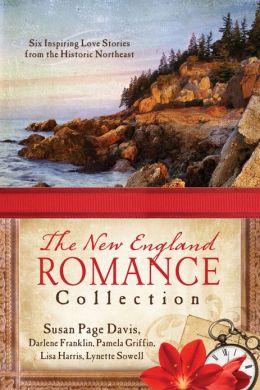
The New England Romance Collection contains five complete historical novels set in Maine, Vermont, Massachusetts, Rhode Island, and Connecticut, including Susan’s award-winning novel, The Prisoner's Wife: Jack Hunter is about to be hanged for the murder of his neighbor. Jack knows he's innocent, and the unscrupulous constables will seize his land when he's dead. He asks Lucy Hamblin, the only girl he ever loved, to marry him in the jail. Her father broke them up three years ago, but now her father is dead. Will Lucy be willing to grant his last request and become the widow Hunter? Set in Maine, 1720. Buy now from Amazon: http://is.gd/qM11Sh or Christian Book: http://is.gd/JSjF7H

Monday, October 7, 2013

The Story is in the Details by Ada Brownell

Ada Brownell
Hey everyone, Annette here. Hope you had a great weekend! Ada Brownell is here today to get our writing week off to a strong start with some advice on how details engage our readers. Enjoy!


The Story is in the Details
by Ada Brownell

Have you noticed books that seize your attention are full of details?

“Description isn’t optional,” said Rebecca McClanahan in her fabulous book, Word Painting.[1] “The success of all fiction, and most poetry and non-fiction, depends in part on description’s image-making power.”

McClanahan tells us description begins in the eye and ear and mouth and nose and hand of the beholder. “Careful and imaginative observation may well be the most essential task of any writer.”

She quotes Aristotle who said, “When our aim is conciseness, naming a subject directly and precisely is the most effective route.”

In my studies I’ve learned the only thing you shouldn’t name is an emotion. Instead we use description to show the character’s reaction to the emotion. He turns and slams a door. She screams. The lady faints. The child vomits. A person trembles so much he spills his coffee. The horse rears after the blast of lightning.

McClanahan says description rarely stands alone and is seamlessly intertwined with other literary elements. She defines effective description this way:

1. Carefully worded and appropriate in sound and in sense, including the musical qualities of language.

2. Sensory. She used this description to show sensory detail –a salty kiss, a dancer’s leap, the fine brown hairs on a lover’s arms.

3. Using moving pictures wherever possible. “Good description can create the illusion of movement and vitality, bringing even a static subject to life.”

I noticed while working as a newspaper reporter how the television cameras at a news conference followed motion. Often the camera zoomed in on my hands writing furiously on a notepad. Movie cameras work much the same way. The reader also follows motion.

4. Employs metaphor or other figurative language. But the value comes from how it serves the story, poem or non-fiction piece.

Drawing the reader into the story is what using descriptive detail is all about. Effective writers’ words are wrapped in it.

[1] Writers Digest Books, Word Painting: A Guide to Writing More Descriptively, Rebecca McClanahan 


 ~~~~~


Enter an area where people are missing and radicals want to obliterate Christianity from the earth.

Joe the Dreamer
After Joe Baker’s parents mysteriously disappear, he finds himself with a vicious man after him. Joe and an unusual gang team up to find his mom and dad. The gang is dedicated to preventing and solving crimes with ordinary harmless things such as noise, water, and a pet skunk instead of blades and bullets. Joe reads the Bible hoping to discover whether God will answer prayer and bring his parents home. In his dreams, Joe slips into the skin of Bible characters and what happened to them, happens to him—the peril and the victories. Yet, crying out in his sleep causes him to end up in a mental hospital’s juvenile unit. Will he escape or will he be harmed? Will he find his parents?

Does God answer prayer? No fantasy. No wizard. Suspense. Christian payload.

Joe the Dreamer: The Castle and the Catapult http://buff.ly/XeqTvH or https://www.createspace.com/3962829 
The book is also available at Barnesandnoble.com, and is listed at Goodreads.com 
To learn more about this author’s books: http://www.inkfromanearthenvessel.blogspot.com 
Amazon Ada Brownell author page: http://www.amazon.com/-/e/B001KJ2C06

To learn more about Ada, visit her website: www.AdaBrownell.com. 

Tuesday, November 1, 2011

Dish on Details by Kimberli Buffaloe


They say the "devil is in the details," but wouldn't it be better to say that "God was in the details?" In the same way, we, as writers, need to make sure our descriptions hold details that can transport our readers into our imaginary places. Kimberli Buffaloe, talented writer and photographer, tells us how we can use details to improve our writing.
~ Angie

She exited the Interstate and turned onto the two-lane highway. Despite the years, nothing had changed. Longleaf pines still bordered the shoulder on one side of the road, and on the other, a dozen men dressed in jeans and wide-brimmed hats roamed through tobacco plants harvesting the bottom leaves.

It took some time, but a writing instructor finally helped me understand the importance of details in a story. Not just information on what a character looks like, what they're wearing, or a description of the setting, though all can be essential. She was talking about details unique to the character’s environment within a given scene.

These details are crucial, and a recent Sunday morning service provided me with prime examples of details that could be used to add authenticity to a story. Every autumn, churches in our area celebrate Homecoming. Before we moved here, our concept of this event involved a school dance or football game. But this version of Homecoming is a call for members whose attendance has tapered off to reclaim their place in the pew.

She turned right, into the parking lot. A sea of battered pickups and old sedans clustered around the little brick church, but she drove behind the building and parked in the scraggly grass of what they once called the overflow lot. She stepped out of the car. The scent of chicken and hot bread carried from cars to the fellowship hall filled the air, and bells in the tiered steeple played, urging those who were willing to come home.

More local flavor is found in the meals that take place after Homecoming and other special services. After partaking of the fellowship table, any author can walk away with a full stomach and a notebook filled with details on regional fare. Then, instead of using a nondescript “dishes overflowed with…” a typical food found anywhere in the country, an author whose story is set in eastern North Carolina could instead make readers’ mouths water with an image of favorites such as sweet potato casserole, chicken pastry (a dish similar to chicken and dumplings, but made with thin strips of pasta instead of clumps of dough) and Bright Leaf’s signature red hotdogs.

Once the picture is painted, anchoring readers in the culture of the region, those details can be “snapped” to the character’s journey.

She climbed the steps toward the front doors. The pews would be filled now. Overflowing like the table in the fellowship hall. She reached for the doorknob. The sleeve of her blouse slipped back revealing the butterfly etched into her arm. Come home, ye who are willing, come home, the bells rang. She was willing, but would the congregation welcome her back, or accept the child she carried?

So while researching a setting, don’t forget to check newspapers and church calendars for annual events and celebrations, and local restaurants for regional food favorites.

Kimberli Buffaloe is a pastor's wife, Penwright, and creator of Front Porch Fiction, and Carolina Towns and Trails, a blog featuring outdoor destinations around the Carolinas. Her contemporary novella, Eternal Weight of Glory, won first place at the 2011 Blue Ridge Mountain Christian Writers Conference, and her short stories have appeared on Christian Fiction Online Magazine. She lives in eastern North Carolina with her husband and two terriers.