Tuesday, August 6, 2019

Big Conference, Small Conference, or Stay Home? by Emily Conrad

I benefit from each writers' conference I attend. So, especially as the big conferences roll around, I feel pressure mount to register and book tickets, afraid I’ll miss out if I don’t go. But the truth is, staying home or attending a smaller conference can be just as valid as a choice to go to a regional or national gathering.

I don’t want to talk you into (or out of) any specific course of action. Instead, I’d like to highlight possibilities to relieve pressure and fear so you’re that much freer to choose the path God is calling you to, whatever it may be.

Let’s look at three benefits of conferences and their alternatives.

Learning


At a national conference, you can learn from experts—Firsthand! In person! Where you can raise your hand and ask for clarification! You’ll get cutting-edge information, and chances are, you’ll hear something you never considered before.

At a smaller conference, you can also learn from experts. Without as much going on to distract you, you may absorb more. (Or maybe I’m the only one who gets distracted by my friends and pitching opportunities…)

You can also learn at home. The same people who present at the big conferences often have authored craft books, blogs, and podcasts that you can read or listen to. In areas that change quickly, such as effective strategies for marketing and platform building, look for materials developed in the last year or so. When in doubt about what to study, ask for recommendations from a writer friend who does well in an area where you want to grow.

Networking with Other Writers


At a conference, whether big or small, you share dinner and experiences with other writers and lean on each other through the highs and lows of pitching and learning.

You'll likely meet up with a bigger percentage of your online writer friends at a large conference, but you might be surprised to run into some at a smaller venue, too. Either way, you will likely make meaningful new connections.

Writers also tend to be an active bunch on social media, and we can get to know each other there or by working together in online critique groups. Since online connection points involve words, and words are our thing, it’s possible to develop meaningful friendships with people you have yet to meet. I certainly have!

Pitching


At a big conference, you can pitch your work to industry pros who aren’t as easy to access at other times. This happens through appointments, after conference sessions, or when you happen to run into your dream agent at lunch. Because the big conferences bring in so many agents and editors, there may be a few for you to pitch to. It’s very possible you’ll receive a request to send your work.

At a smaller conference, you may only have one pitch opportunity—or none. But that can allow you to focus on that one pitch and, once it’s over, to relax and enjoy the conference.

But meeting someone in person is no guarantee a partnership will result, and many agents (though fewer editors) are open to submissions from people they haven’t met. I’ve landed requests from agents for materials through the slush pile, so it’s possible. From home, you can develop rapport with agents by commenting on their blogs or other public social media posts. That way, when your name shows up in their inbox, they’ll recognize it.

So, What’s a Writer To Do?

Some things that come naturally at a conference take extra dedication at home. But family, work, or financial restraints may render conferences impractical for a time. Pros and cons tug both ways.

Another factor I’m learning to look for in my own heart is fear. Fear of the unknown or of rejection may vie to keep us home. Fear of missing out may encourage us to go where God hasn’t called us.

There’s a lot to consider that I could never hope to fit in a blog post.

That’s why, as with every decision, we need to seek God’s leading. There is no cookie cutter plan that fits all writers. Only He can lead us through the pros and cons for His glory in a way that suits our unique place along our own unique journey.

May we seek Him in all that we do, whether we stay or go.

What resources have helped you grow as a writer? Whether it's something you've done or studied from home or a benefit you gained from a conference (or maybe a little of both!), I'd love to hear about it!
_____________________

Don't let fear make your decisions about which writers' conference to attend (if any). @emilyrconrad discusses 3 benefits of conferences and their stay-at-home alternatives on #seriouslywrite #writetip #writersconference

With every decision, including writers' conferences, we need to seek God’s leading. There is no cookie cutter plan that fits all writers. A #writetip from @emilyrconrad on #seriouslywrite

Writers can benefit tremendously from conferences, but if you can't make one this year, you still have options! @emilyrconrad on #seriouslywrite #writetip


Photo credits
People talking in large room photo by Mimi Thian on Unsplash


Two women talking at table photo by Amy Hirschi on Unsplash
Presentation with sticky notes photo by You X Ventures on Unsplash

Graphics created on Canva.com


Emily Conrad headshotEmily Conrad writes Christian romance and a blog to encourage women of faith. Her debut novel, Justice, released from Pelican Book Group in 2018. She lives in Wisconsin with her husband and two rescue dogs. She loves Jesus and enjoys road trips to the mountains, crafting stories, and drinking coffee. (It’s no coincidence Justice is set mostly in a coffee shop!) She offers free short stories on her website and loves to connect with readers on social media.

www.emilyconradauthor.com
Facebook.com/emilyconradauthor
Instagram.com/emilyrconrad
Twitter.com/emilyrconrad
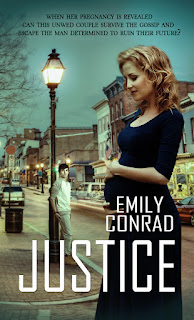
https://www.amazon.com/Justice-Emily-Conrad-ebook/dp/B0792HGXQN/JUSTICE

Jake thought he was meant to marry Brooklyn, but now she's pregnant, and he had nothing to do with it. Brooklyn can’t bring herself to name the father as she wrestles with questions about what her pregnancy means and how it will affect her relationship with Jake. If Harold Keen, the man who owns the bookstore across from Jake's coffee shop, has anything to do with it, the baby will ruin them both. Can Jake and Brooklyn overcome the obstacles thrown in their path, and finally find the truth in God's love and in each other?


Amazon
Barnes and Noble

Monday, August 5, 2019

Your Own Hero’s Journey By Angela Ruth Strong

Angela Ruth Strong
As a writer, no doubt you've heard about the Hero's Journey--that path your main characters must travel to get to their satisfying story ending. We, as people, are also on a journey. Read on for today's encouragement from fellow Mountain Brook Ink author Angela Ruth Strong! ~ Annette

As a writer, I like to look at God as the author of life. It better helps me understand both my job and my world. It gives me hope in knowing He created me for a purpose and gave me the exact strengths needed to overcome the challenges I face.

When plotting a story, I give my main character a goal. They would prefer to follow a straight path from point A to point B. But in order for them to grow as an individual, I have to put obstacles in their way.

That first obstacle is known as the inciting incident. It’s also the point of no return. And it usually seems to be related to the character’s flaw. For example, in the Bible story of Joseph, he gets thrown into a pit because his brothers don’t like the fact that he has dreams of ruling over them.

To keep the story clean and neat, authors follow the rule of three obstacles to overcome, the third being the black moment when all hope seems lost. Let’s follow Joseph’s journey and see how this works out for him. First, he’s sold as a slave to Potiphar. He rises above his circumstances and is put in charge of the other slaves. Second, Potiphar’s wife gets angry that he won’t sleep with her and lies about him so that he’s thrown in jail. Again, he rises above and is honored even in prison. Third, he gives the interpretations to a couple other prisoners’ dreams and because of this is called before Pharaoh to translate a dream.

Standing before Pharaoh could have been where the story turned tragic. Joseph’s life could have ended right there if he didn’t do what Pharaoh requested. This is the black moment when all hope would have been lost for anyone else. But see, God had given Joseph exactly what he needed to overcome.

I think it’s interesting how both the inciting incident and the black moment are related. The flip side of Joseph’s strength had been his weakness. He had a past where using his gift had gotten him into trouble. What if he’d been too traumatized/afraid to try again?

I can relate to this. My first husband claimed he left me because I loved writing more than I loved him. I’d actually offered to give up my writing to save my marriage, and when I remarried, I was afraid to write. But perhaps because of how I’ve grown, this gift is now helping me to find healing—and hopefully it will help others find healing in my first non-fiction book I just sold, Moving On After Your Husband Moves Out.

When explaining this concept to a good friend, she got teary eyed. She’d always been judged for her “big personality.” Her whole life she’s been hushed and joked about. She’s often been afraid to be herself because of it. But it’s her contagious laugh and extroverted connectiveness that made her a success in her career as an event planner for a retirement community. She was given exactly what she needed to overcome in her own hero’s journey.

This is why it’s so important for us to ask God for direction, find our identity in Him, and trust that He didn’t make a mistake when he plotted our lives. He designed us to overcome.

One other thing that has stuck with me about writing is this statement: The darker the black moment, the more powerful the resolution.

When everything is going wrong then life gets even worse—which it usually does—I know it’s part of God’s plan. I shake my fist at heaven and say, “I am onto you. As much as this sucks right now, you are allowing it to give me a powerful story of overcoming so that I can encourage others to do the same.”

This is what story is all about. This is why the Bible repeatedly tells us to tell our stories. If writing from experience, we aren’t only quoting Genesis when we say, “What you intended against me for evil, God intended for good.” It’s personal. And it’s powerful.

So whether you’re a writer, or God has given you other amazing gifts, don’t take them for granted. And when life seems to turn on you, know it’s not the end. You have been prepared for this. Now go make your own life story one worth telling.

“What you intended against me for evil, God intended for good.” It’s personal. And it’s powerful. @AngelaRuthStrong is at #SeriouslyWrite today with encouragement for your writing journey.

Authors are on their own Hero's Journey. Find encouragement to overcome your life's obstacles at #SeriouslyWrite today. @angelaruthstrong

~~~~~


A Cuppa Trouble
Can a couple of baristas chase down a car thief without spilling a drop of their favorite drink?

Plans for a Valentine's Day grand opening of a small-town coffee shop go awry when the first customer is killed. Evidence points toward the victim being mixed up in a car theft ring, but shop owners Tandy and Marissa have reason to believe he was framed. An assortment of suspects--from a pink-haired heir to Tandy's charming ex--all seem to know a little too much about grand theft auto.

Without approval from either their boyfriends or the gum-chewing FBI agent in charge, the shop owners go on stakeouts, plan stings, and pursue justice in a high-speed car chase. If they don't find the killer soon, it might be more than their love lives in trouble.

~~~~~

Angela Ruth Strong sold her first Christian romance novel in 2009 then quit writing romance when her husband left her. Ten years later, God has shown her the true meaning of love, and there's nothing else she'd rather write about. Her books have since earned TOP PICK in Romantic Times, been optioned for film, won the Cascade Award, and been Amazon bestsellers. She also writes non-fiction for SpiritLed Woman. To help aspiring authors, she started IDAhope Writers where she lives in Idaho, and she teaches as an expert online at WRITE THAT BOOK. Visit her at www.angelaruthstrong.com. She'd love to hear from you.

Connect with Angela:

Amazon: https://www.amazon.com/Angela-Ruth-Strong/e/B00B8BSHLE/
BookBub: https://www.bookbub.com/authors/angela-ruth-strong
Goodreads: https://www.goodreads.com/author/show/4746114
Website: https://www.angelaruthstrong.com/
Facebook: https://www.facebook.com/groups/1557213161269220/
Twitter: https://twitter.com/AngelaRStrong

Friday, August 2, 2019

Balancing the Projects by Melinda V. Inman

Meme: We can't do both intensive marketing and insightful thinking simultaneously
A couple of months ago, I wrote about God’s smile upon this year’s writing projects. With joy, I’m producing both a novel and a novella in 2019. For some of us, that’s no big deal. Hats off to you!

For others of us, that’s astonishing. (It is for me!) At one time, this was thought to be impossible. After all, Jane Austen only produced six novels in her lifetime. How could dear Jane have even thought of churning out an entire novel and a novella in one year? Of course, she couldn't.

We have computers. She didn’t. We can research, write, edit, revise, and publish using only our fingertips and our keyboards. Dear Jane wrote in longhand on parchment using quills and India ink.

Now it’s easy. At that notion, we all throw back our heads and laugh, right?

Unfortunately, now we have myriads of distractions every single day. We must man Facebook groups, Twitter accounts, and Instagram. We must constantly chronicle our lives, floating them out there in consumable sound bites and photos, for we are our brand, and we now must do all our own marketing.

We can barely grasp a moment’s silence, let alone hours with no interruptions as we contemplate our next plot twist or search for the perfect word. We don’t have the space for thoughtful reflection, unless we leave our homes, turn off our devices, and go beyond the reach of any Wi-Fi signal. Even then, it takes days to unkink our brains from the short attention spans to which we’ve accustomed them.

What, oh what, is the beleaguered writer to do?

Please, don’t consider this sacrilegious. I’m certain that I’m on solid spiritual ground. Brace yourselves.

We must unplug. We must disconnect. We must shut it down.

I’m sorry. I hear all of your objections. They’re my objections, too.

First a caveat: I don’t mean permanently. Whew!

The truth is that meeting with the Lord consistently to find the strength and sustenance for the writing journey and for life as a Christian requires quiet and contemplation. This is true of the composition of a novel as well, let alone a novella at the same time. This means that we can’t do both intensive marketing and insightful thinking simultaneously.

There. I said it. What they ask of us is impossible around the clock, every day, all year. It can’t be done with grace.

So, what do we do?

We still take time with the Lord each day, meditating on his Word.

But then, for half of each year, some of us engage in all of our marketing and blogging, securing it all away in blog posts ready to publish and in paid marketing schedules like Buffer. And then, for the remaining months, we write and draft fiction exclusively with no concern for marketing, other than responding and interacting.

Other writers do this same work in smaller bites. We pack our Buffer and our blogpost feed with a month or so of posts and tweets, all ready to go, knowing we can also jump in for ten or fifteen minutes on each platform after our writing work is done each day. And then, with all of that ready for the month, we devote the majority of our time to fiction.

All of us are wired uniquely as writers. None of us can work like anyone but ourselves. So, how do we know which method to use?

We pray. We rely on the Lord. He will show us the plan that works best for our individual brains and our personal work habits and processes. God, our God, is all over in this. He’s our Maker, the Giver of our gifts, the Inspiration for our work, and the Creator of the world of story about which we write.

Hit your knees. Ask him. Call on him. He’ll provide the plan specifically for you. Follow it by his grace. Walk in his steps.

God bless you, dear writer. Go forth and write!

What they ask us to do is impossible around the clock, every day, all year. It can't be done with grace. So, what do we do? #SeriouslyWrite #WritingCommunity #FictionWriter via @MelindaVInman
Melinda V. Inman, Author of Refuge; Fallen; and No Longer Alone

Raised on the Oklahoma plains in a storytelling family, Melinda Viergever Inman now spins tales from her writer’s cave in the Midwest. Her faith-filled fiction illustrates our human story, wrestling with our brokenness and the storms that wreak havoc in our lives. Find her weekly at http://MelindaInman.com/blog/. To find her work and to be notified of future published novels, follow her at http://bit.ly/MelindasBooks/.

Connections:

Facebook Author Page: https://www.facebook.com/pages/Melinda-V-Inman/189731601076470
Website: http://melindainman.com/
Twitter: https://twitter.com/MelindaVInman
Pinterest: http://www.pinterest.com/melindavinman/


Thursday, August 1, 2019

Be a Writer Who Dares to Write with Honesty by Beth K. Vogt

“Writing has made me more honest.”

My statement surprised me, even as it rang true.

I was out on an impromptu date with my husband, Rob. The conversation had turned to my writing life – the ups, the downs, and the constant choice to trust God with this hard work of living my dream.

And somewhere, in the midst of it all, came this moment of clarity of how choosing to be a novelist has demanded that I live an honest life.

We writers talk about learning our craft. We attend conferences and take workshops on dialogue and setting and characterization. We study the rules so we can break ‘em. We search for our voice until we recognize the sound of it in every word, sentence, paragraph, and chapter.

All of this makes us better writers. Possibly even award-winning writers. (Awards are fun, y’all!)

But what gets me every time is when another writer dared to put from-her-heart-honest words on the page. That kind of writing makes me stop and think, “I want to write like that.”

Sometimes what I’m reading is as simple as a Facebook post. Or an Instagram post. But it’s not a social media post masquerading as Mary Poppins, where a person’s life – past, present, future – is practically perfect in every way.

And then there are the times I read a nonfiction book, and the writer dared to be candid about their struggles. Or I read a novel, and the author’s imaginary characters are living real life on the page. I’ve struggled with that pain, cried those tears, regretted those choices.

And then … then I chose to write like that. I decided I write honest.

Yes, it would be easier to hide behind my words. But story is an opportunity to connect with our readers. And if we’re going to connect, why not risk enough to connect in a genuine way?

Is it scary to write honest? Yes. There have been times I’ve written a scene that’s a direct reflection of my heart – pulled from my life – and I’ve second guessed myself. Wondered if it’s too honest. Too much. Times when I’ve pushed away from the computer to cry. To pray. And come back to write.

But it’s a choice of either living out loud as a writer … or whispering. And the writing life should never, ever be about whispering.

What choice are you making with your words?

Amazon Buy Link
Moments We Forget (Thatcher Series)

Jillian Thatcher has spent most of her life playing the family peacemaker, caught in the middle between her driven, talented older sister and her younger, spotlight-stealing twin sisters. Then on the night of her engagement party, a cancer diagnosis threatens to once again steal her chance to shine.

Now, Jillian’s on the road to recovery after finally finishing chemo and radiation, but residual effects of the treatment keep her from reclaiming her life as she’d hoped. And just when her dreams might be falling into place, a life-altering revelation from her husband sends her reeling again.

Will Jillian ever achieve her own dreams, or will she always be “just Jillian,” the less-than Thatcher sister? Can she count on her sisters as she tries to step into a stronger place, or are they stuck in their childhood roles forever?

Beth K. Vogt believes God’s best often waits behind the doors marked “Never.” Having authored nine contemporary romance novels and novellas, Beth’s first women’s fiction novel with Tyndale House Publishers, Things I Never Told You, released May 2018. Moments We Forget, book two in the Thatcher Sisters Series, releases May 2019. Beth is a 2016 Christy Award winner, a 2016 ACFW Carol Award winner, and a 2015 RITA® finalist. An established magazine writer and former editor of the leadership magazine for MOPS International, Beth blogs for Novel Rocket and The Write Conversation and also enjoys speaking to writers group and mentoring other writers. Visit Beth at www.bethvogt.com