Showing posts with label writing dialog. Show all posts

Wednesday, October 7, 2015

Is Your Writing Authentic? by David Stearman

Are you being authentic with your writing voice? Today, David Stearman tells us why we should be. -- Sandy

David: Someone suggested the other day that I refrain from starting Facebook messages with “Hey,” implying that it was impolite. After much research online and elsewhere, I learned that it’s not. It’s just informal. And I’m an informal guy, so for me, it’s also authentic. Which is a good thing, at least in my books.

How does this relate to writing? Well, I’m a contemporary novelist. I write stories about the here and now. If you write period pieces, what I’m about to share might not relate to you. But if you spin stories about the here and now, it could be vital.

You see, I used to have this problem: I tried too hard to write like a writer, or at least how I thought a writer should write. My grammar was perfect; no run-on sentences, dangling participles, mixed metaphors, etc. And yet I wasn’t engaging my readers. And why was that? Because my grammar was too perfect; no run-on sentences, dangling participles, mixed metaphors…get my drift?

In other words, my writing wasn’t authentic. My everyday speech doesn’t consist of complete paragraphs delivered in textbook grammar. I talk the way I talk. (Yeah, I said it that way on purpose, because that’s the way I express myself in real life.)

So I quit striving for dictatorial perfection and began focusing on the story. And my writing improved. Drastically. Nowadays some readers tell me they can’t put my books down, that they read them straight through, sometimes over a single weekend.

Now believe me, I’m not a fabulous novelist. Many of you could write me into a ditch. But if my voice is anything, it’s genuine, and I think that helps cover more than a few of my weaknesses.

Don’t get me wrong. I’m a firm believer in good technique. POV, active sentences, all of that. But, honestly, I don’t think grammatical details matter all that much anymore, at least in contemporary pieces. After all, people don’t buy our books to refresh their sixth-grade English class. They buy them to be engaged. Entertained. Carried away. And focusing on those things, rather than mechanics, helps us get them there.


What makes your writing voice genuine? 


~~~~~


Falling for ChloeDavid Stearman is a singer/songwriter who performs concerts and conducts missionary outreaches in numerous international locations. His work as a novelist grew from his career as a professional songwriter and recording artist. His stories are heavily influenced and seasoned by his travels in the US and abroad.


David currently resides with his wife Diane, Bichon Frisé Lilli, and parrot Kermit in Louisville, KY, where he focuses on writing stories filled with adventure and romance. 

Thursday, May 15, 2014

Writing Dialogue that Breathes by Debby Mayne

Debby Mayne
Dora here. Last week Debby Mayne offered a great starting point for Writing Dialogue that Breathes. If you missed it, you can read the full version here. This week she's wrapping it up with three more tips. Enjoy! ~Dora

One of the key components to a successful story is dialogue, so spend some time working on improving the skill of writing it. Most newbie fiction authors struggle with dialogue at first, but after you find the groove, you'll look forward to the next conversation between your characters. I've judged quite a few writing competitions, and one of the things that I look for is compelling dialogue. In my opinion, strong dialogue is the foundation of a compelling, character-driven story. 

Tags
Dialogue tags have been beaten to death, and I'm going to give them one more flogging here. If you can avoid using "he blurted," "she hissed," and other such dialogue tags, then by all means do so. Most of the time, you don't have to use any tags if you can show who is speaking through action. Here's an example: Samantha picked up her fork, stared at her plate in disgust, and sighed. "I hate peas." You know that Samantha is talking based on the action. It's fine to use an occasional "she said" or "he asked" if you must, but don't overdo it.

Punctuation and Paragraphing
Punctuation and dialogue paragraphing were designed to prevent confusion in the written word. Learn proper use of quotation marks, periods, commas question marks, and other punctuation. Otherwise, you'll lose your readers. Each time a different person speaks, start a new paragraph. Yes, this is proper, even for single-word grunts. When I judge a contest that has several people speaking in the same paragraph, I view this as work from someone who didn't bother learning the craft. After you practice proper punctuation and paragraphing, it will become second nature, and you won't even think about it.

Read Your Work Aloud
One of the best ways to make sure your dialogue sounds natural and comes across the way you intend is to read it aloud. I do this any time I write long conversations between my characters or have sections where I'm not sure of how it will "sound" to the reader. I'm sure my husband thinks he lives with a crazy person, but he's used to it by now.


Purchase Link
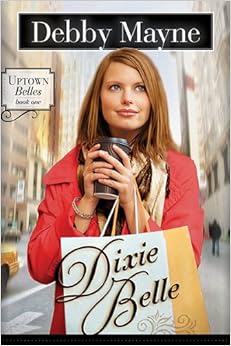
Dixie Belle and Uptown Belles series Blurb 
In Dixie Belle, book one of the Uptown Belles series, sparks fly when Cissy Hillwood arrives in New York City from her Alabama hometown and meets her uncle’s fiercest competitor.
SERIES DESCRIPTION: In this fish-out-of-water contemporary romance series, three Southern belles living and working in New York City develop a friendship based on their fondness and homesickness for the South. Although they’re different from each other in many ways, they share a love for the South and faith in Christ. And they each fall victim to Cupid, one at a time and when they least expect it. At least they have each other for venting, laughing with, and…shopping.

Debby Mayne has published more than 30 books and novellas, 400 print short stories and articles, more than 1,000 web articles, and a slew of devotions for women. She has also worked as managing editor of a national health magazine, product information writer for HSN, a creative writing instructor for Long Ridge Writers Group, and a copy editor and proofreader for several book publishers. For the past eight years, she has judged the Writers Digest Annual Competition, Short-Short Contest, and Self-Published Book Competition. Three of Debby’s books have been top ten favorites by the Heartsong Presents book club. Love Finds You in Treasure Island, Florida received 4-1/2 stars and was named a "Top Pick" by Romantic Times Magazine. Her latest book, Dixie Belle, is the first in the Uptown Belles series published by Charisma House.