Showing posts with label brainstorming. Show all posts

Wednesday, August 23, 2017

Puzzling It Out One Piece at a Time By Pam Hillman

Each story idea starts with one tiny little puzzle piece. Just one.

A word, a photo of days gone by, a scent, a location, an event. Before The Promise of Breeze Hill became the full-fledged novel that it is now, it was just a single thought to write about an indentured servant.

And, since I like to put a bit of a twist on my stories, I wanted the hero to be the one who was placed in this situation. Why? Fish out of water, maybe. Or having a character who can’t walk away, but then later doesn’t want to walk away.

To make matters worse, let’s indenture the poor guy to the heroine, and something in his past makes this a really bad thing. I just kept tightening the ropes on him. I also wanted my indentured servant to be an alpha male, with a take-charge attitude. More thinking outside the box made Connor a man who has already served a forced seven year indenture, but willingly indentures himself to help bring his brothers from Ireland.

Fairly quickly in this process, I made the decision to move the story to the late 1700s, early 1800s at the latest as indentured servants weren’t that common in the 19th century. Not completely unheard of, but not the time period we first think of for indentured servants. So, the 18th century is a departure for me as all my other published works fall between 1850-1890. How my hero ended up being Irish, I’ll not be knowing. It just is.

Then I needed to decide where to set this indentured servant story. More than likely, we think of indentured servants as in the New England states, Virginia, Pennsylvania, the Carolinas, etc. But I’m from the South, and New Orleans and Natchez are two of the oldest cities in the new world, so it made sense to plop my characters on my home turf.

What would make Connor so adverse to being under the thumb of a woman? What baggage and problems can I throw at Isabella Bartholomew?

The story just keeps growing, one puzzle piece at a time. And it started with the germ of an idea to write about an alpha male indentured servant.
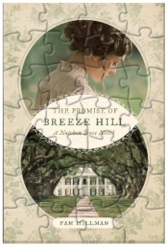

How do you go about putting all the puzzle pieces together for your story?


~~~~~~


CBA Bestselling author PAM HILLMAN was born and raised on a dairy farm in Mississippi and spent her teenage years perched on the seat of a tractor raking hay. In those days, her daddy couldn't afford two cab tractors with air conditioning and a radio, so Pam drove an Allis Chalmers 110. Even when her daddy asked her if she wanted to bale hay, she told him she didn't mind raking. Raking hay doesn't take much thought so Pam spent her time working on her tan and making up stories in her head. Now, that's the kind of life every girl should dream of. www.pamhillman.com

Wednesday, March 22, 2017

When Inspiration Requires Assembly by Hillary Manton Lodge

Sometimes, the ideas just don't come and we're stuck. Panic time, right? Maybe not. Read Hillary Manton Lodge's advice for those times when those ideas stop flowing. -- Sandy

Hillary: As writers, we have a complicated relationship with inspiration.

If ideas didn’t come to us, we wouldn’t write – it’s as simple as that. But ideas don’t tend to arrive fully formed and realized. Instead, they show up on the doorstep in a series of boxes and without instructions. If you’re adapting a work, you’ve at least got instructions, but not in modern English, and at any rate, what’s the fun in following the rules?

All of this idea assembly is grand until you need to reach for the next piece of the puzzle and it’s nowhere to be found.

It’s a place I found myself last week, as I began working on a new project. I’d just wrapped up copy edits on my new release, Jane of Austin, and after hammering away at the nitpicky stuff, was ready to get back to making something new.

But the new idea was still a logistical puzzle, and when the answers didn’t pop instantaneously into my head, I began to flail. I need to schedule a brainstorming session, I thought at first. I wonder if Writer A would have an idea.

And then I stopped. And took a breath.

I’ve written seven books. Five have been released, a sixth out in June. This whole book idea thing? Not my first rodeo. And yet my brain is quick to hit the panic button.

Here’s the thing – these ideas? They’re mine. They show up on my brain’s doorstep. And sooner or later, I figure out what to do with them. Every time.

Don’t get me wrong – I’m deeply indebted to the brainstorming help I’ve received over the years. My second and fifth novels, in particular, benefited from story-loving people willing to come play make-believe with me. But right now, it’s early days. I have the time to let my brain relax and get back into the habit of making things.

So I took a walk, and rather than slip into panic that the pieces weren’t coming together, I looked at the trees and their baby leaves, and let my thought wander. I considered one idea, discarded it, and tried another, like a jigsaw puzzle of a big blue sky.

And after a while? The right pieces fit into place. I came up with solutions that I loved. And once I had the framework, I could chat about it with a friend who could see where I was going with it and spin it out just a little further.

So writers – here’s the challenge. Call in the reserves if you must, but see if you can hold out until the end of the process, when you’re tired. Enjoy the beginning, and hold it close. You’ve learned the craft, so trust your brain. Trust the creative mind the Lord has gifted to you. Give your mind a chance to play, and enjoy it when it takes you somewhere extraordinary.


Do you have a secret for opening those creative doors in your mind?


~~~~~

Hillary Manton Lodge is the author of the critically acclaimed Two Blue Doors series and the Plain and Simple duet. Jane of Austin is her sixth novel.

A storyteller at heart, in her free time she enjoys experimenting in the kitchen, graphic design, and finding new walking trails. She resides outside of Memphis, Tennessee with her husband and two pups.


Tuesday, January 19, 2016

Five Ways to Get Your (Writing) Groove On by Marie Wells Coutu


Marie Wells Coutu
The holidays are over and, if you’re like me, you took a few days off from writing. And you’re finding it difficult to get back into your writing routine.

Or maybe you finished your WIP two weeks ago and took a much-needed break.

Now it’s time to get back to work. But you can’t seem to get your seat in chair. Perhaps you’re stuck for an idea of what to write next. Or you’re in the middle of your novel but the characters won’t talk to you. Or the weather has frozen your mind.

Sometimes all it takes is to open a document on your computer and start typing, and the thrill of seeing a story come to life returns. But other times, the blank page staring back at you causes brain freeze.

Here are some ideas to help thaw those creative juices:
Image by pixabay.com
  • Pick a minor character from your favorite TV show or movie and write his/her backstory.
  • Take your favorite writing craft book (one that gives writing exercises) and turn to Chapter 5. Whatever the writing assignment is, DO it (don’t just read about it, as I frequently do).
  • Look through a magazine or newspaper and find a photo with two or more people. (Don’t get sidetracked reading the articles!) Write a scene about what happens next with those people.
  • Think about your life in the past two weeks and pick an event that had the potential to be tension-filled. Change one action or line of dialogue and write about what would have happened.
Now that you’ve gotten words on the page again, keep writing. Maybe even try this:
  • Challenge yourself to your own NaNoWriMo. Write the first draft of a novel in 30 days. Sign up for the Novel Track: Writing loop for members of ACFW for encouragement along the way from fellow writers. Or just grab one accountability partner and root for each other.
The important thing is to get started today.


You’re a writer, so write something.
About the Author
Marie Wells Coutu began telling stories soon after she learned to talk. At age seven, she convinced neighborhood kids to perform a play she had written. She wrote her first book, “I Came from Venus,” in eighth grade, but studied journalism in college. After a career writing for newspapers, magazines, governments, and nonprofits, she returned to her first love—writing fiction—at the age of fifty-five. Her debut novel, For Such a Moment, won the Books of Hope Contest. Thirsting for More, the second book in the Mended Vessels series, released in April 2015. Books in the series are contemporary re-imaginings of the stories of biblical women, including Esther and the woman at the well. Marie retired after 15 years with the Billy Graham Evangelistic Association, and she and her husband now divide their time between Florida and Iowa.

Thirsting for More
Northern transplant Victoria Russo moves to the charming southern city of Charleston, South Carolina, from cold Connecticut, hoping to renovate her career, her life, and an old house. Instead, she faces animosity, betrayal, and calamity. Will she repeat the pitfalls of her past mistakes, or find the freedom and restoration she seeks?

Thursday, November 21, 2013

Merry Mayhem by Anita Higman

Anita Higman
Novels set during the Christmas season are becoming more popular than ever. People love reading cozy stories during the coziest time of the year. But the stories can’t be all about Santa’s rosy cheeks and merry dimples. If I don’t have St. Nick ripping his pants on the way down the chimney, or landing on some burning coals, or facing a gun-toting homeowner, then readers might want to settle in for a long winter’s nap—but only after opening the shutters to toss my novel out onto the new-fallen snow!

Okay then, let’s brainstorm a snuggly Christmas scene that can be tweaked enough to turn tranquility into turmoil.

Our heroine and hero, Lucy and Harold, are in love—oh, how sweet—and Lucy knows that Harold has created a perfect evening so he can pop the question. The tree is decorated, Josh Groban’s Noel CD is playing, and Harold and Lucy are nestled in front of a crackling fire sipping hot wassail. That’s a nice Christmassy proposal scene, but we can only take cozy so far. Ray Bradbury said, “First, find out what your hero wants, then just follow him!” Good advice, but what if my heroine, Lucy, wants to marry Harold and is about to yes? It’s the end of my happily-ever-after story. Something ugly will need to happen soon. Some sort of struggle, internal or external.

Here’s one scenario. Hours before their romantic interlude, Lucy discovers that one of her beloved friends, Alice, is also in love with Harold. This could cause some struggle, but Lucy may say yes to the proposal anyway, since she could convince herself that she is the only woman on earth who could make Harold happy. Okay, so after a chapter or two, the conflict fizzles.

Maybe a moral dilemma would turn up the heat. What if Lucy’s friend, Alice, was a widow, and the reason her husband is dead and her children are fatherless is because of an accident—an accident that was Lucy’s fault? And what if Alice had a problem with depression because of her loss and grief? Okay, that’s a twist that will make readers squirm. Lucy is now going to say no to Harold’s proposal—that is, if she has any moral marbles in her bag—and she’ll want to give Harold a chance to fall in love with Alice.

Good, but maybe the conflict needs another layer. Perhaps since the accident—which was years ago—Alice has used the incident as leverage, and she has forced Lucy into a subservient mode that has turned into oppression. Lucy will not only need to love Alice as Christ would, but she’ll also need discernment and wisdom and courage to break free of Alice’s control. Hopefully this additional dimension will help keep Lucy tripping toward the altar until she finally gets to say, “I do.”

If you have trouble creating conflict in your story, then find a brainstorming buddy who can help you flesh it out. This simple but effective idea has worked well for me.

I think one of the best books out there on plot development and conflict is The Plot Thickens by Noah Lukeman. I highly recommend it. Hope this helps.

Merry mayhem to all and to all a goodnight!


Dora here. How do you layer the conflict 
in your stories?
Do you brainstorm with your buddies?


Purchase Link
Charlotte Rose Hill, who loves serving up country delicacies and uniquely blended teas, discovers that while she's been faithfully caring for her tearoom customers, she'd also been quietly turning into an old maid. Charlotte did fall in love with a young man, Sam Wilder, when she was 18, but his family forced her to walk away from their relationship. Now, more than a decade later, Charlotte finds that she still has feelings for her first love. Initially thrilled to learn that Sam has come home to Middlebury, Texas, Charlotte is then devastated to learn that he's brought someone with him: his fiancée. But all is not lost when one of the loveable but meddlesome townsfolk decides to get involved. Will the next marriage in Middlebury be for Sam and Charlotte?

Best-selling and award-winning author, Anita Higman, has thirty-six books published. She’s been a Barnes & Noble “Author of the Month” for Houston and has a BA in the combined fields of speech communication, psychology, and art. Anita loves good movies, exotic teas, and brunch with her friends. 

Please visit her website at www.anitahigman.com and drop her a note by clicking the “Contact Me” button.