Showing posts with label comparison. Show all posts

Tuesday, September 22, 2020

Thoughts on Writer's Voice by Emily Wickham

“For Thou didst form my inward parts; Thou didst weave me in my mother’s womb. I will give thanks to Thee, for I am fearfully and wonderfully made; Wonderful are Thy works, And my soul knows it very well.” Psalm 139:13-14, NASB 

Years ago a friend told me I was very relational. I’d never thought of that—nor have I ever forgotten. Her observation granted me insight about my God-given personality and how that shapes my approach toward others. This desire to relate well even impacts my writing. I desire to engage every reader’s mind and touch each one’s heart because the Lord fashioned me to do so. 

Writing enables me to express myself. As one who processes information slowly, I think more clearly when I write. My husband, on the other hand, can think quickly in the midst of speaking, an ability I admire. We communicate differently, but that’s okay because God uniquely designed each of us. 

While it’s appropriate to respect another person’s strengths, it’s detrimental to overlook our own. We might be tempted to imitate another writer’s style, thinking, “If I could just write like so-and-so, readers would multiply.” For instance, my sister possesses tremendous writing skills—her words stimulate the imagination and cause me to feel as though I’m within reach of the sights and sounds she describes. Her use of imagery exceeds my own. 

She’s a much better writer than I am… 

Yes, that thought has bruised me from time to time. But God has taught me the value of being me. Using my voice. Expressing my feelings and thoughts in accordance with His design of me. 

The Lord has entrusted certain strengths to each of us, which we should recognize with gratitude. I might not excel at thinking quickly in certain circumstances, and I often struggle to create images with words, but God enables me to listen well, observe beyond the surface, and offer biblical perspective. These skills translate into my writing, prompting me to pen compassionate, thoughtful pieces that implement God’s Word. 

Let’s thank the Lord for the way He made us. He knew what He was doing when He formed each of us in our mother’s womb. As Psalm 139:14 says, we’re “fearfully and wonderfully made.” God’s works are wonderful. Do we understand His works include us? 

Be. You. 

Allow your personality and your heart to shine through the words you write. Be confident in using your God-given voice. And know that the Lord will continue to shape you along with your skills as you progress on your writing journey. 

A Writing Exercise: 

• List five aspects of your personality and explain how each one complements your writing. 
• In a few sentences, describe how your writing is unique (like you!). 
• Journal a prayer. Ask God to increase your ability to use your voice for His glory. 

I’d love to hear what you come up with! Please feel free to share below.

Allow your personality and your heart to shine through the words you write. via @emilywickhamPH @MaryAFelkins #WritersLife #Writing #SeriouslyWrite

Note: Thoughts on Writer's Voice" first appeared on April 2, 2019, www.proclaiminghimtowomen.com.

Emily Wickham seeks to stir hearts toward Jesus. She writes for LifeWay, speaks at ladies’ events, and shares “Devotions for Women” videos on social media. Emily encourages Christian women plus equips Christian writers on her blog, www.proclaiminghimtowomen.com. She is the author of one Bible study, which was translated into Spanish in 2016. Emily, a resident of North Carolina, is Mark’s wife of 30+ years. They are the blessed parents of four adult children and two daughters-in-love. God’s faithfulness and love inspire Emily on her journey through life as she purposes to exalt Christ through written and spoken words. 

Connect with Emily: 

Alcanzando la Justicia
Do you know any missionaries to Spanish-speaking women? Or, is your church involved in outreach to the Hispanic community? Emily would love to put her Bible study on Esther into their hands, and she’s willing to fundraise for this purpose. Please see her website for more information. You also can purchase Alcanzando la Justicia on Amazon.

Tuesday, June 4, 2019

Whataboutism: What it is and how to beat it, by Emily Conrad

The Dictionary.com word of the day on May 16th was, “whataboutism.” The definition wasn’t quite what I expected. I’ll share that with you, and then I’d like to suggest a couple of alternate definitions, if I may.

Dictionary and plant


whataboutism
noun
  1. The official definition is available here. Basically, it’s a tactic to excuse one’s own faults by pointing out others’ faults, as in, “What about all the typos in published books? The two in my query letter shouldn’t have been a big deal. We’re all human.”
  2. A tactic to claim a right to the blessing someone else was given, as in, “What about her publishing contract, God? Don’t I deserve one, too?”
  3. A tactic to pull another person else down with us, as in, “What about him? Shouldn't his work have been rejected for too much telling, too?”
  4. A phrase used to check on the welfare or to advocate for another person, as in, “What about Jane? Do you have a minute to listen to her pitch, too?”
(Side note: The word was first used long after the publication of the dictionary I photographed for this post, so though it made for nice pictures, it doesn't have an entry to match the post.)

Whataboutism may sound kind of playful and funny at the outset, but the examples of it at work aren’t so funny anymore. Whether the official definition or one of my made-up ones, whataboutism is all about comparison and entitlement.

This is an incredibly easy trap to fall into as a writer.

Whether the official definition or one of my made-up ones, whataboutism is all about #comparison and entitlement. This is an incredibly easy trap to fall into as a #writer. #butJesus via @emilyrconrad on #seriouslywrite
A close up of an old Webster's Dictionary entry for the word what

Whataboutism can disguise itself by dropping the phrase it’s known for while keeping the comparison and entitlement. Instead of “What about the agent that asked to see her full manuscript? Why didn’t that agent request mine?” we may ask, “She got a request. Why didn’t I?”

And if we’re really going to get honest here, we’re probably mentally cataloguing what we feel are the faults in that other writer’s manuscript. Our focus is on ourselves, and though we’re not resorting to the childish phrase “What about…?”, we are insulting another writer, her work, and the journey it’s taken her to get where she is.

But she just started writing last year. I’ve been doing this for over a decade. Her journey’s nothing compared to mine.

Instead of focusing on how I know these thought processes so well, let’s just agree with a cringe that comparison and entitlement are ugly beasts.

They are also ancient ones.

There’s a “what about” question in the Bible. In John 21:21, after Jesus predicts the kind of death Peter will face, Peter spots John.

So when Peter saw him, he asked Jesus, “Lord, what about him?” (NET)

Though I’d previously assumed Peter asked this out of jealousy or frustration over his own fate, my MacArthur study Bible suggests Peter asked out of concern for John. If MacArthur is correct, Peter’s version of whataboutism is about as noble as it gets.

Either way, Jesus doesn’t seem to be a fan of the question. Read His response for yourself:

“If I want him to live until I come back, what concern is that of yours? You follow me!” (John 21:22, NET)

Despite concurrently serving the same God in similar ministries, Peter and John weren’t given the luxury of comparison.

As Christian writers, we’re not, either.

Despite concurrently serving the same God in similar ministries, Peter and John weren’t given the luxury of #comparison. As Christian #writers, we’re not, either. via @emilyrconrad on #seriouslywrite


What God decides for one of us is between that person and God. No one else should try to insert themselves into the conversation.

Now there are different gifts, but the same Spirit. And there are different results, but the same God who produces all of them in everyone. (1 Corinthians 12:4 and 6, NET)

Continue reading in 1 Corinthians 12, and you’ll see that instead of comparing ourselves to others, we’re told to recognize that each of us is one part of a larger body. We serve different purposes in different ways, but we each have purpose in Christ.

Instead of arguing about what we might feel entitled to, we’re told to “clothe yourselves with humility toward one another, because God opposes the proud but gives grace to the humble. And God will exalt you in due time, if you humble yourselves under his mighty hand by casting all your cares on him because he cares for you.” (1 Peter 5:5-7, NET)


When we practice humility toward others and toward God, He gives us grace and eventually… exalts us? That sounds too good to be true—and apart from the grace of God, it is. But this doesn’t mean our work is guaranteed to someday hit the big bestseller lists, because the bestseller lists aren’t the point. Christ is the point, and when we have Him, we truly have everything we need.

It’s our job to follow Him. Let’s pursue excellence as we do so.

But, come to think of it, there is one way we’re encouraged to notice what others are up to. The Bible encourages us to outdo each other in showing honor (see Romans 12:10). We can’t compete like that if we haven’t noticed what our brothers and sisters in Christ are up to. Instead of a mean-spirited or self-focused “What about…?” mentality, this mindset centers around, “How can I lift up someone else?”

An old Webster's Dictionary
Since I’ve already taken the liberty of inventing definitions for whataboutism, why not make up a whole new word?

Howcanism
noun
  1. A tactic to lift others up in Christian love, as in, "How can I bless that person I’m tempted to be jealous of? How can I promote others to spread to a hurting world the hope reflected in Christian writing? How can I encourage someone today, even if my dreams still seem a long way off?"
When you recognize whataboutism, push it out of your life with something new: howcanism.

“Everyone will know by this that you are my disciples – if you have love for one another.” (John 13:35, NET)

_____________

Whataboutism: What it is to the #Christianwriter and how to beat it by @emilyrconrad on #seriouslywrite

Emily Conrad headshotEmily Conrad writes Christian romance and a blog to encourage women of faith. Her debut novel, Justice, released from Pelican Book Group in 2018. She lives in Wisconsin with her husband and two rescue dogs. She loves Jesus and enjoys road trips to the mountains, crafting stories, and drinking coffee. (It’s no coincidence Justice is set mostly in a coffee shop!) She offers free short stories on her website and loves to connect with readers on social media.

www.emilyconradauthor.com
Facebook.com/emilyconradauthor
Instagram.com/emilyrconrad
Twitter.com/emilyrconrad

https://www.amazon.com/Justice-Emily-Conrad-ebook/dp/B0792HGXQN/JUSTICE

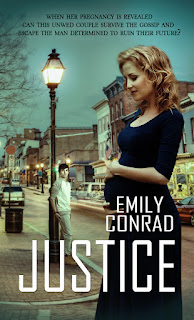
Jake thought he was meant to marry Brooklyn, but now she's pregnant, and he had nothing to do with it. Brooklyn can’t bring herself to name the father as she wrestles with questions about what her pregnancy means and how it will affect her relationship with Jake. If Harold Keen, the man who owns the bookstore across from Jake's coffee shop, has anything to do with it, the baby will ruin them both. Can Jake and Brooklyn overcome the obstacles thrown in their path, and finally find the truth in God's love and in each other?


Amazon
Barnes and Noble

Tuesday, April 2, 2019

You've Got Talent - Don't Bury It! by Emily Conrad

The novel intimidated me, so I did the mature thing and put off reading it.

I knew from the cover alone that the story followed a Mary-like character through an assault and into an unplanned pregnancy that costs her dearly. You could describe my debut novel Justice the same way. 

The only difference I knew of between this other novel and Justice was the author. I’m a little-known writer just starting out in her career. This other book, The Atonement Child, is by a legend of Christian fiction: Francine Rivers.

Obviously, she would’ve done a better job with the subject matter than me. People who read Justice would think I was writing a knock-off of this earlier story—though I hadn’t been aware of The Atonement Child until after Justice was written.

I’ve heard other aspiring authors lament bigger names publishing a book similar to their own work-in-progress, so I know I’m not the only one intimidated by the competition.

Perhaps others then, too, have felt insecure and intimidated in other areas of their writing life. For example, some of the women I now count my closer writing friends also intimidated me at first.

They had larger platforms, fancy agents, multiple books published, and witty social media presences. What could I offer them by way of friendship? But then, I started interacting with them and discovered that we’ve each been granted specific talents and strengths. It turns out, those talents and strengths meld well together.

So, I’m learning that everyone has something to offer—myself included.

When we hang back in fear, we’re missing an opportunity to cheer on someone else’s strengths and to learn about and use what we have to offer.

Everyone misses out when one of us buries our talent out of insecurity.

Just imagine what could’ve happened if, before I’d found a publisher, I’d learned of The Atonement Child and stopped in my tracks, never reading it and never moving forward with the story on my heart.

That would be acting like the servant in the Parable of the Talents who buried the talent he’d been given instead of investing it.

I feel for that servant. Perhaps he looked at the guy with the five talents, trading away and making a profit, and wondered how he could ever possibly keep up.

I can’t! My master’s going to be so disappointed in me!

Playing the comparison game, he may have noticed he was only given one talent. My Master must have less faith in me. If even He knows I don’t measure up, what can I do but bury this talent? Surely it’s safer in the ground than in my hands.

The word “talent” means something different in modern language than it means in the Bible. I like how it carries over, and how loaded it is when I write about burying a talent.

But the original meaning is important. A talent was twenty years’ worth of wages. Imagine what you could do with that!

Well, that one servant did imagine, and he imagined getting himself in trouble. So, he buried the talent.

When he returns the talent to his master, the master isn’t pleased. He gives that investment to someone else, saying (and this is important, so don’t just skim it because you know the story):

"For the one who has will be given more, and he will have more than enough. But the one who does not have, even what he has will be taken from him.” Matthew 25:29, NET

This seems harsh until I consider each of the servants should’ve fallen under the category of “one who has.” Despite the differences, they’d all been given a significant sum. Twenty years’ wages! 

What made a servant with twenty years’ wages “one who does not have”?

His fear-driven perspective. He bowed needlessly to intimidation.

We need to be careful, lest we do the same. Often, the difference between those who have and those who have not is not a matter of gifting or possessions, but rather a matter of our perspective.

Like the servants in the parable, we are all richly supplied to serve our Lord and Master. Yes, some will have larger audiences, but aspiring or published, indie or traditional, young or old, we’ve all been created with a purpose.

We've all got talent specific to our time, place, and audience. It’s up to us to not bury it.

I saw this again proved true when I gathered the courage to read The Atonement Child.

As I turned pages, the intimidation factor fell away. I saw I had built the story and its author into something larger than life. Rivers is still a master of Christian fiction. She still has a larger audience than me.

And yet, we both have our callings and our strengths and places in the market.

Francine Rivers is Francine Rivers. She has her style, her themes, her characters and plot twists. 

Emily Conrad, it turns out, is Emily Conrad. She’s different in style, themes, characters, and plot. 

There was no need for me to be intimidated. We’re different, and we’re each tasked with being faithful to our calling, however that looks.

Whoever you are, and wherever you are on this writing journey, you’ve got talent. Don’t bury it.

Whoever you are, and wherever you are on this #writing journey, you’ve got talent. Don’t bury it. via @emilyrconrad #SeriouslyWrite


                                          ✏️📖✏️📖✏️📖✏️📖

Emily Conrad writes Christian romance and a blog to encourage women of faith. Her debut novel, Justice, released from Pelican Book Group in 2018. She lives in Wisconsin with her husband and two rescue dogs. She loves Jesus and enjoys road trips to the mountains, crafting stories, and drinking coffee. (It’s no coincidence Justice is set mostly in a coffee shop!) She offers free short stories on her website and loves to connect with readers on social media.
www.emilyconradauthor.com
facebook.com/emilyconradauthor
Instagram.com/emilyrconrad
Twitter.com/emilyrconrad
Amazon https://www.amazon.com/Justice-Emily-Conrad-ebook/dp/B0792HGXQN/ 
Barnes and Noble https://www.barnesandnoble.com/w/justice-emily-conrad/1127841580 

Justice
Jake thought he was meant to marry Brooklyn, but now she's pregnant, and he had nothing to do with it. Brooklyn can’t bring herself to name the father as she wrestles with questions about what her pregnancy means and how it will affect her relationship with Jake. If Harold Keen, the man who owns the bookstore across from Jake's coffee shop, has anything to do with it, the baby will ruin them both. Can Jake and Brooklyn overcome the obstacles thrown in their path, and finally find the truth in God's love and in each other?

Tuesday, March 3, 2015

Comparing Yourself With Others by Laura V. Hilton

Laura V. Hilton
I recently read an email from someone else entitled “10 Good Things That Happen When You Compare Yourself to Someone Else”
1.

Short list, right? And yet that is something that I’m struggling with right now.

Not naming names, but one author got a spot I wanted in a book collection. She is an established author with over forty books published. I felt bad for me, envious of her, especially when she gets contracts handed to her without seeming to try. “I was approached to write…”

And then there is an Indie author, who tried for years to land an agent or editor and get a contract. She wisely decided to go it alone, outsold many traditionally published authors and landed a movie contract. Wow.

Envy. Green-eyed monster alert. I’m definitely comparing myself to others here. And falling fall short. Why am I even trying? I’m not good enough! (insert fake crying sounds)

Not only that but my creativity level has flat-lined.

But God didn’t call me based on my merits. He saw a broken individual who promised her life to Him to serve as He wills. Not as I will. As He wills. And even though I’m not getting movie contracts (which I really don’t want anyway) or getting contracts handed to me without much effort, I am serving Him the way He called me.

Some indeed preach Christ even of envy and strife; and some also of good will: Philippians 1:15

I don’t want to be the one writing and telling of God’s mercy and grace with envy in my heart. I want to do it with gladness. With joy that He called me.

Serve the Lord with gladness: come before his presence with singing. Psalm 100:2

This is a lesson I’m learning. Not to compare myself with others. To be the writer God called me to be. To be faithful with what He’s given me, and not hiding the talents He blessed me with somewhere they’d be “safe.” To put the words on the computer screen page and write on, trusting He will come through. To find joy.

Are you following the Lord and using the talents He gave you to serve Him? Or are you hiding your gifts because you aren’t as good as someone else?

Lord, help me not to compare myself with others. Help me to follow You without question, without looking at what others are doing, and serve You the way You want me to. Amen
About the Author
Award winning author, Laura Hilton, her husband, Steve, and three of their children make their home in Arkansas. She is a pastor’s wife, a stay-at-home mom and home-schools. Laura is also a breast cancer survivor. Laura also has two adult children.

Her publishing credits include three books in the Amish of Seymour series from Whitaker House: Patchwork Dreams, A Harvest of Hearts (winner of the 2012 Clash of the Titles Award in two categories), and Promised to Another. The Amish of Webster County series, Healing Love (finalist for the 2013 Christian Retail Awards). Surrendered Love and Awakened Love followed by her first Christmas novel, A White Christmas in Webster County, as well as a three book Amish series with Whitaker House, The Amish of Jamesport series, The Snow Globe, The Postcard in April 2015, and The Bird House in September 2015. Other credits include Swept Away from Abingdon Press. Laura is a member of American Christian Fiction Writers and a professional book reviewer.

Connect with Laura
http://www.amazon.com/Laura-V.-Hilton/e/B004IRSM5Q
visit her blogs: http://lighthouse-academy.blogspot.com/ &http://lauravhilton.blogspot.com/
Twitter: @Laura_V_Hilton
Facebook: https://www.facebook.com/pages/Author-Laura-V-Hilton/161478847242512
Pinterest: http://www.pinterest.com/vernetlh/

The Postcard (from Promised to Another)


David Lapp survived a “code blue” when he was in a buggy/semi truck accident in Seymour, Missouri. Now after extensive therapy he has lingering mobility problems and is still struggling to find his place in the world. Lured away from Webster County by thoughts of closed buggies and a postcard friendship he’s developed with an Amish girl in Jamesport, he moves north, hoping for a fresh start. He finds work in the area tying flies and basket weaving, selling his products in the Amish markets in the Jamesport area.

Rachel Miller dreams of travel, but feels tied to her Amish life. She is being courted by Obadiah Graber, but wonders if there’s more to life. When she sees David’s name mentioned in The Budget, she strikes up a pen pal friendship with David while he’s in the hospital and in therapy, consoling him when he and his girlfriend part ways. She never dreams that David will come north and move into her community. David is still fearful in the buggy, especially in high traffic areas. Feeling he’s called by God to preach, David spends hours in the Bible, but the Amish discourage him, believing their ministers should be drawn by lot. Will David follow his call, even if it takes him out of the Amish church? Will Rachel realize her dream to travel?


Wednesday, May 21, 2014

Letting Go of Comparison by Ian Acheson

Do you know someone who appears to have it all together in a way that makes you wonder why you can't be like that? Today, Ian Acheson gives us some tips about dealing with envy. -- Sandy

Ian: One of the benefits of social media is we can get an insiders view of authors we admire. They will often share a lot about their writing routine. Many times I’ve marveled at some authors incredible ability to produce. Somehow between doing another job, managing their household commitments, being an engaged spouse, parent and friend, they’re able to pump out thousands of words every day.

I’m in awe.

Sometimes (well more frequently than I really would care to admit) the nagging green beast of envy rises up within my heart. It’s a similar feeling that may strike me when a friend appears to have everything worked out and their life appears to be a bed of roses.

Comparison.

Arrgh. Yes, I think we can all relate to it.

As the annual book award season is about to start in earnest it is very easy to start wondering why others books have received more accolades than ours. Forget accolades, what about the number of reviews such and such has received for their latest work?

“Comparison is all about conformity and competition,” Brene Brown says. “When we compare, we want to be the best or have the best of our group.”1 Even the disciples (and members of their families) struggled with similar impulses. Recall how James and John’s mother asked of Jesus that her sons be seated at his right and left hand. The other disciples were “indignant” at such a request. (Matthew 20: 20-28)

So how do I deal with the green-eyed monster of comparison?


  1. I thank God for the person whose situation has prompted the negative emotions in me. It is amazing what happens when we start being thankful and praising God for the blessings another is experiencing. Something magical happens and those pesky negative emotions subside.
  2. Encourage the other person in some way. You may not know them but these days with so many methods of connecting with people sending a tweet or FB comment usually isn’t too difficult. Once again, this encouragement acts like an anaesthetic to the wound in our heart. 
  3. Get back to my writing project. God has made us to create (yes, all of us) and it’s in using our creativity that we can leave our own small original imprint on the world. No one else can write the story that He has placed in our heart. Yes, it is risky as Erwin McManus states, “We cannot create without risk.”2 But it is only in leaning into the discomfort that comes with risk that we are able to experience the joy from obeying the call that burns within our hearts. The call to create.

Note: 1. The Gifts of Imperfection, Brene Brown, Hazelden 2010 p94-95 2. Article in RELEVANT Magazine,  May/June 2014, titled “Everyone is Creative”, Erwin McManus.

How do you deal with the green-eyed monster of comparison?  


~~~~


Ian Acheson is an author and strategy consultant based in Sydney, Australia. Ian's first novel of speculative fiction, Angelguard, is now available in the US, UK, Canada and Australia. He’s currently busy working on Wrestling with Shadows, the second novel in The Chronicles of the Angelguard. You can find more about Angelguard at Ian's website, on his author Facebook page and Twitter


Monday, June 10, 2013

Creative Best Series: Six

Annette M. Irby
Hey writers, Annette here! It's the beginning of another writing week. Are you geared up and ready to go? Today we're tackling one of those temptations we've all faced at some point: comparing ourselves with others. Join me as we peek at the next line in our Scripture study of Galatians 6:4-5 from the Message Bible.

Don’t compare yourself with others

Walking the halls at a well-attended writers’ conference is enough to give you an inferiority complex, if you let it. You read the nametags of those you pass and right away accusations come. “What are you doing here? Do you think you can write as well as ______? Who are you trying to kid?”

Ugh! 

What about contest entries? You know so-an-so's publisher will also be submitting his/her latest, greatest novel. Why even bother? 

Reading can bring the same hazard. Pick up a book by your favorite author. She writes in your chosen genre. And she’s fantastic! You don’t read her books, you savor them. You devour them again and again. Her prose inspires you. But accusation comes: “I could never write that well! And I call myself a writer?”

Comparison's Results

See how destructive comparison can be? Devastating.

Comparison could result in:

~ Insecurity, which leads to defeat

~ Pride (if you think you’re writing better, which is rather subjective and therefore unsubstantiated)

~ Writer's block. If you can never measure up (to this arbitrary standard comparison invents), why try? Creativity doesn't thrive under harsh criticism. 

~ Defeat. If we compare our timeline with someone else's we may feel so discouraged we give up. But who knows when our big break will come? Hang in there and focus on the path God has laid for you.

If we remember we're just as valuable as the multi-published, award-winning authors, we'll more easily battle the temptation to compare.

The Flipside

Sure, learn what you can from others’ work. Learn the craft. Study what they’re doing right and perhaps even investigate things you think they did wrong. But compare yourself with them? Not a good idea. The following verse advises against it too:

Since this is the kind of life we have chosen, the life of the Spirit, let us make sure that we do not just hold it as an idea in our heads or a sentiment in our hearts, but work out its implications in every detail of our lives. That means we will not compare ourselves with each other as if one of us were better and another worse. We have far more interesting things to do with our lives. Each of us is an original. (Galatians 5:25 MSG)

An Original

"Each of us in an original!" Yes!
Just as you differ from others, your calling differs from another’s calling—even if they are called to write for God. Plus, you’re uniquely you, with your own voice, your own message, your own style. You’d be comparing apples to oranges if you held up your work against theirs. It’s folly.

God knows what He’s doing. He calls us to all run this race of our Christian walk. But all faithful servants of God win! Don’t waste emotional energy on comparison. Shake off those bonds and just be your creative best!

Your turn: Can you think of times when comparing yourself or your work helped? Can you recall a time when comparison stifled your creativity? And how do you keep from giving in to the temptation to compare yourself with others? 

~~~~~

Husband Material: 99¢ e-book
 
Wyatt Hansen has no fears about commitment, but only three years have passed since his beloved wife died, and he can't bring himself to break their annual dinner date—that is until he meets restaurant owner, Lara Farr. Lara doesn't have time for romance; she has a business to run. At least that's what she tells herself so she doesn't have to admit that commitment scares her. But Lara's business is failing, and it just may take a miracle—or marketing analyst, Wyatt Hansen—to save it. Can Wyatt rescue Lara’s restaurant, help her overcome her fears, and prove he is good husband material?